
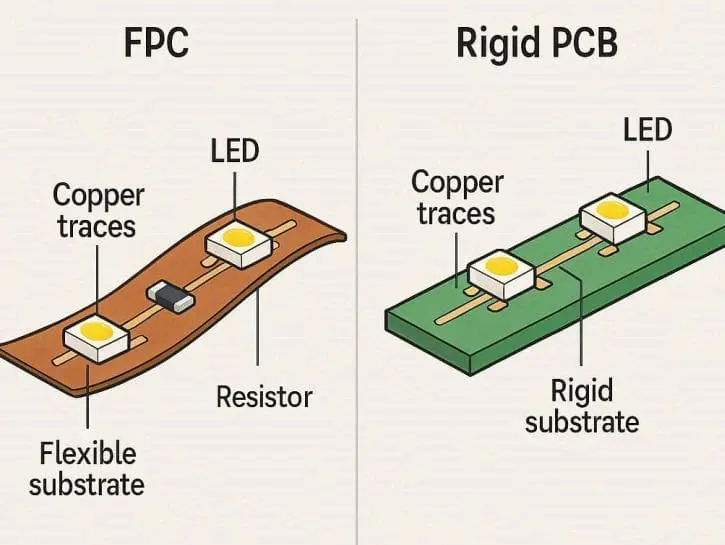
Tenemos una pregunta: ¿por qué una tira de LED se dobla como una cinta mientras que otra se rompe como una galleta?
Las placas FPC (Circuito Impreso Flexible) utilizan sustratos delgados y flexibles de poliimida con trazas de cobre laminadas, mientras que las PCBs rígidas dependen de laminados rígidos de FR-4 o aluminio con cobre más grueso. Estas diferencias en el material base y la construcción determinan la flexibilidad, la disipación de calor, el peso y la aplicación en la que cada tipo de placa funciona mejor en la iluminación LED.
La distinción entre suave y rígido suena simple, pero enmascara una red de compromisos de ingeniería que afectan directamente el costo de instalación, la vida útil del producto y la reputación de la marca Circuito Impreso Flexible 1. Permítame explicarle cada capa estructural para que pueda tomar una decisión de compra con confianza.
¿Cómo afecta la composición del material de las FPC frente a las PCBs rígidas a la flexibilidad de mi instalación?
Cuando enviamos muestras de tiras LED a contratistas en Madrid o Barcelona, lo primero que prueban es cómo la tira se dobla alrededor de una esquina o dentro de un recoveco.
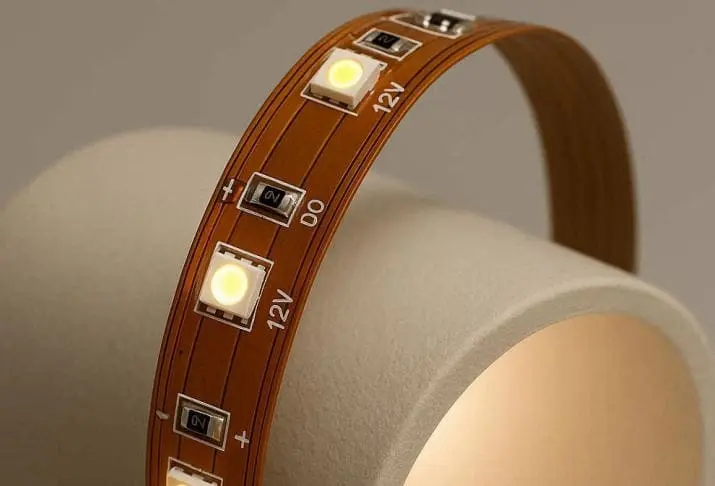
Los sustratos FPC—que suelen ser de poliamida o película de poliéster—permiten que las tiras LED se doblen, torzan y adapten a superficies curvas sin agrietarse, mientras que las placas rígidas hechas de FR-4 o aluminio no pueden flexionarse y deben montarse en planos planos y rectos. Esta diferencia de material es el factor principal que determina dónde y cómo se puede instalar la iluminación LED.
Comprendiendo los sustratos base
Las FPC comienzan con una película de poliimida (PI). La poliimida puede soportar temperaturas de hasta 400 °C y permanece estable a través de miles de ciclos de flexión. La lámina de cobre laminada en ella suele ser cobre laminado en caliente (RA), que es más suave y dúctil que el cobre electrodepositado (ED) que se encuentra en la mayoría de las placas rígidas. Esa ductilidad es lo que permite que la tira se enrolle alrededor de un radio de 10 mm sin que la traza se agriete.
Por otro lado, las PCBs rígidas dependen de FR-4 2—una lámina de epoxy reforzada con fibra de vidrio. FR-4 es fuerte en compresión y corte, pero no se dobla. Algunas barras LED rígidas usan un núcleo de aluminio en su lugar, lo que añade un disipador de calor incorporado pero hace que la placa sea aún más rígida.
Comparación de la pila de capas
Una FPC de una sola capa para una tira LED básica tiene solo tres capas funcionales: película base, adhesivo y lámina de cobre, rematada con una cubierta de aislamiento. Una FPC de doble capa añade una segunda plano de cobre separado por más poliimida, ofreciendo mejor distribución de corriente y rutas de retorno a tierra.
Una PCB rígida para una barra de luz LED típicamente tiene un capa de cobre 3, un prepreg dieléctrico y un núcleo de metal o FR-4, rematado con máscara de soldadura y serigrafía.
| Característica | FPC (Flexible) | PCB rígida |
|---|---|---|
| Material base | Poliimida (PI) o Poliéster (PET) | Lámina de epoxy FR-4 o aluminio |
| Tipo de cobre | Revestido en laminado (RA), 0.5–1 oz/ft² | Electrodepositado (ED), 1–2 oz/ft² |
| Grosor total | 0.1–0.3 mm típico | 0.8–2.0 mm típico |
| Radio mínimo de curvatura 4 | 5–10 mm (capa única) | No aplicable—no se dobla |
| Peso por metro | ~3–8 g | ~30–80 g |
| Temperatura máxima de funcionamiento | Hasta 400 °C (PI) | 130–170 °C (FR-4) |
Qué significa esto para la instalación en el mundo real
En nuestra experiencia enviando a contratistas en España, la iluminación curvada en moldura, pasamanos de escaleras y señalización retroiluminada requieren tiras FPC. La tira debe seguir la arquitectura, no luchar contra ella. Las barras rígidas funcionan perfectamente para iluminación de tareas bajo armarios o sistemas de conductos lineales donde el canal de montaje es completamente recto.
Una cosa que muchos compradores pasan por alto: puedes agregar un refuerzo localizado—un pequeño trozo de FR-4 o acero—a un FPC en el área donde se encuentra un conector o un componente pesado. Esto te da lo mejor de ambos mundos sin convertir toda la tira en rígida. Usamos este enfoque con frecuencia en proyectos personalizados de marca privada donde el cliente necesita una zona de conector sin soldadura en una tira completamente flexible.
La conclusión es que la composición del material no solo influye en "blando o duro". Controla tu radio mínimo de curvatura, tu presupuesto de peso, tu límite térmico y, en última instancia, el rango de proyectos en los que puedes pujar con confianza.
¿Qué estructura de PCB proporciona una mejor disipación de calor para mis tiras de LED de alta luminosidad?
El calor es el asesino silencioso de la vida útil de los LED. Cuando nuestro equipo de I+D prueba nuevas tiras COB de alta potencia, la temperatura de la unión es la primera métrica que monitorizamos.
Las PCB rígidas —especialmente las versiones con núcleo de aluminio o rellenas de cerámica— disipan el calor significativamente mejor que las FPC estándar porque su respaldo metálico actúa como un disipador de calor integrado, alejando la energía térmica de las uniones de los LED más rápidamente. Las FPC pueden reducir esta brecha con pesos de cobre más pesados (2–4 oz/ft²) y adhesivos térmicamente conductores, pero rara vez igualan a una placa rígida con núcleo metálico en rendimiento térmico bruto.
Cómo se mueve el calor a través de cada estructura
En una PCB rígida con núcleo de aluminio, el calor viaja desde la almohadilla del LED a través de la traza de cobre, a través de una fina capa dieléctrica (a menudo de solo 75–100 µm), y hacia la base de aluminio. El aluminio luego irradia y conduce el calor a lo largo de toda su longitud. La conductividad térmica del aluminio es de aproximadamente 200 W/m·K, por lo que toda la barra actúa como un largo disipador de calor.
En una FPC, el calor viaja desde la almohadilla del LED a través de la traza de cobre y luego llega al sustrato de poliimida. La conductividad térmica de la poliimida es de solo aproximadamente 0.12 W/m·K —más de mil veces menor que la del aluminio. El calor esencialmente queda atrapado a menos que se diseñe para evitarlo.
Soluciones de ingeniería para los límites térmicos de las FPC
Hemos encontrado varias formas prácticas de mejorar la disipación de calor de las FPC en nuestras líneas de producción:
- Cobre más pesado: Pasar de 1 oz a 2 oz o incluso 4 oz de cobre aumenta el área de la sección transversal para la conducción de calor a lo largo de la traza.
- Vías térmicas: Pequeños orificios pasantes metalizados debajo de la almohadilla del LED canalizan el calor a un plano de cobre en la parte posterior.
- Respaldo de cinta adhesiva de aluminio: Algunos clientes montan tiras FPC en canales de extrusión de aluminio, añadiendo efectivamente el disipador de calor de núcleo metálico externamente.
- Diseño de trazado más ancho: Pads de cobre más amplios bajo los LED que distribuyen el calor lateralmente antes de llegar al poliimido.
Datos de rendimiento térmico
| Parámetro | FPC (1 oz Cu, sin respaldo) | FPC (2 oz Cu, canal de aluminio) | PCB rígido de núcleo de aluminio (1,6 mm) |
|---|---|---|---|
| Conductividad térmica del sustrato | 0,12 W/m·K (PI) | 0,12 W/m·K (PI) + 200 W/m·K (canal de aluminio) | 200 W/m·K (núcleo de aluminio) |
| Espesor dieléctrico | 25–50 µm (cobertura de lámina) | 25–50 µm | 75–100 µm |
| Elevación típica de la unión del LED (@ 700 mA) | +35–45 °C por encima del ambiente | +18–25 °C por encima del ambiente | +12–18 °C por encima del ambiente |
| Densidad de potencia LED adecuada | Baja a media (≤12 W/m) | Media a alta (12–24 W/m) | Alta (24–60 W/m) |
Cuando el rendimiento térmico realmente importa
Para iluminación decorativa de acento que funciona a 5–10 W/m, una FPC de una sola capa estándar maneja el calor sin problemas. Los LED están espaciados ampliamente, la densidad de potencia es baja, y la carcasa de silicona o extrusión proporciona suficiente enfriamiento pasivo.
Pero para iluminación de tareas de alta salida, iluminación de estanterías comerciales o tiras de reemplazo de focos exteriores que funcionan a 20 W/m o más, la gestión térmica se vuelve crítica. Aquí, las placas rígidas o FPC de cobre pesado montadas en perfiles de aluminio son esenciales. Siempre aconsejamos a nuestros socios distribuidores que especifiquen la extrusión como parte del sistema térmico, no solo como un accesorio cosmético.
Un error común que vemos es que los compradores eligen una FPC delgada de una sola capa para un proyecto de 24 W/m porque es más barata por metro. En 6–12 meses, la depreciación del lumen se acelera, aparecen cambios de color y siguen reclamaciones de garantía. El ahorro inicial se elimina por los costos de reemplazo y la pérdida de confianza en la marca.
¿Por qué debería priorizar las PCBs rígidas sobre las FPC para mis proyectos de iluminación comercial a gran escala?
Realizar una instalación de iluminación de 200 metros para un centro comercial es muy diferente a decorar un acento en el vestíbulo de un hotel. Nuestro equipo de soporte de proyectos maneja ambos, y la elección de la placa a menudo se divide justo en esa línea.
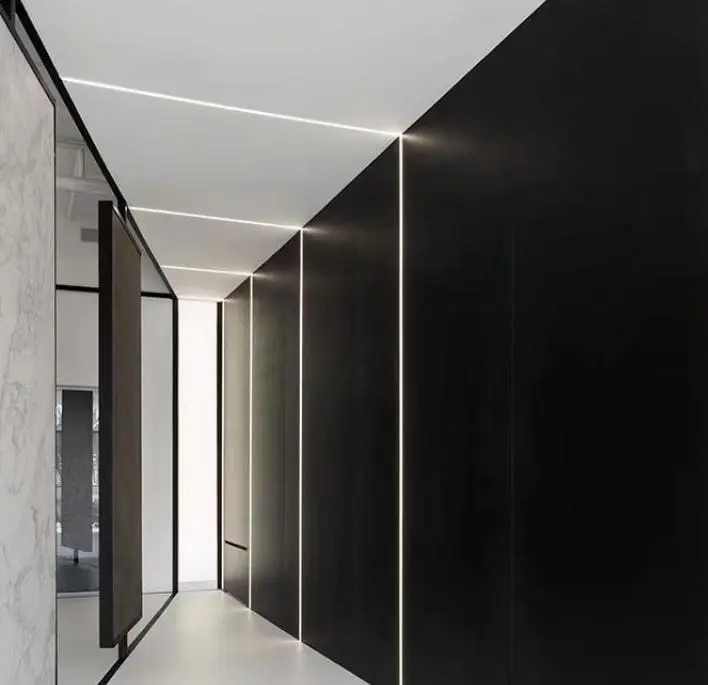
Para proyectos de iluminación comercial a gran escala que exigen una alta salida de lúmenes, estabilidad mecánica a largo plazo y producción en masa rentable, las PCBs rígidas ofrecen ventajas claras: mejor disipación de calor, menor coste de fabricación por unidad en volumen, control de impedancia más ajustado para drivers direccionables y reparaciones en campo más fáciles, lo que las convierte en la opción estructural más segura cuando no se requiere flexibilidad.
Costo a escala
La fabricación de PCB rígidas utiliza procesos altamente estandarizados. Los paneles FR-4 son materiales de consumo, y la mayoría de las fábricas de placas los manejan en líneas totalmente automatizadas con plazos de entrega cortos. Las FPC requieren equipos especializados para laminación rollo a rollo 9, corte láser y registro de cubierta. En volúmenes superiores a 5.000 metros, la diferencia de costo por metro puede ser del 15–30% a favor de las placas rígidas.
Para distribuidores que atienden a contratistas comerciales—donde la presión de margen es intensa—esta brecha de costos importa. Nuestro equipo de cotizaciones ve regularmente cómo cambia el cálculo: una vez que la flexibilidad queda fuera de la mesa, las placas rígidas ganan en precio.
Fiabilidad mecánica en instalaciones fijas
La iluminación comercial permanece en su lugar durante 5–10 años. La vibración de los sistemas HVAC, los ciclos térmicos entre día y noche, y los golpes ocasionales durante el mantenimiento ponen a prueba la placa. Las PCB rígidas manejan estas tensiones sin fatiga en las trazas. Las FPC también pueden soportarlas, pero solo si la tira está completamente adherida a una superficie estable y nunca sujeta a flexión no intencionada. En la práctica, los equipos de instalación no siempre son delicados, y las placas rígidas perdonan más fácilmente un manejo brusco.
Integridad de señal para iluminación inteligente
Muchos proyectos comerciales ahora utilizan tiras de LED direccionables con líneas de datos SPI o DMX. Integridad de la señal 10 depende de una impedancia constante a lo largo de la traza. En una placa rígida, el grosor del dieléctrico y la geometría del cobre permanecen constantes. En un FPC, la flexión puede cambiar sutilmente el espaciamiento entre la traza y tierra, introduciendo discontinuidades de impedancia. Para recorridos cortos esto es insignificante, pero en cadenas de datos de 50 metros, puede causar parpadeo o errores de dirección.
Reparación y Mantenimiento
Cuando una sección falla en una barra de LED rígida, un equipo de mantenimiento puede soldar y reemplazar un solo componente con un soldador estándar. En un FPC, el sustrato delgado y la cubierta hacen que la reparación sea mucho más difícil. En un entorno comercial donde el tiempo de inactividad cuesta dinero, la reparabilidad es una especificación real, no solo algo deseable.
Matriz de Decisión para Proyectos Comerciales
| Criterio | Ventaja de PCB rígido | Ventaja de FPC | Veredicto para lo comercial |
|---|---|---|---|
| Costo en más de 5,000 m | 15–30 % menor | — | Rígido |
| Gestión térmica | Disponible núcleo metálico | Necesita canal externo | Rígido |
| Durabilidad mecánica | Alta resistencia al impacto | Alta resistencia a la flexión | Rígido (instalación fija) |
| Integridad de señal (SPI/DMX) | Impedancia estable | Variable bajo flexión | Rígido |
| Flexibilidad en la instalación | Solo recto | Curvas y contornos | FPC (si se necesitan curvas) |
| Reparación en campo | Sencillo | Difícil | Rígido |
Dicho esto, no todos los proyectos comerciales son líneas rectas. Atrios curvos, envolventes de columnas y paredes decorativas aún necesitan tiras FPC. La estrategia inteligente es especificar barras rígidas para los recorridos lineales principales y tiras FPC solo donde las curvas lo exijan. Esta estrategia híbrida mantiene los costos bajos mientras preserva la libertad de diseño.
¿Cómo afectan las diferencias estructurales entre estas placas a mi fabricación personalizada de marca privada?
Crear una marca privada de tiras LED significa que cada decisión estructural se refleja en tu hoja de especificaciones, en tu embalaje y, eventualmente, en tus reclamaciones de garantía. Co-desarrollamos tiras personalizadas con socios de marca privada en Alemania y Australia cada mes, por lo que vemos exactamente dónde la estructura de la placa genera dolores de cabeza o ventajas competitivas.
Las diferencias estructurales entre las FPC y las PCBs rígidas afectan directamente las dimensiones personalizables de tu producto de marca propia, la economía de pedidos mínimos, la flexibilidad en la marca, los protocolos de prueba y los tiempos de entrega. Las FPC permiten una mayor variedad de SKU mediante corte en rollo, mientras que las placas rígidas simplifican el control de calidad y reducen el costo por unidad en volumen, lo que significa que la elección de la placa define toda tu estrategia de producto.
Flexibilidad en SKU y Longitudes Personalizadas
Las tiras FPC se fabrican en rollos largos, luego se cortan a medida en puntos de corte designados. Esto significa que un solo rollo maestro de FPC puede generar SKUs de 300 mm, 500 mm o 5.000 mm con cambios mínimos en la herramienta. Para una marca privada que ofrece un catálogo amplio, esto es potente.
Las barras rígidas requieren panelización individual. Cada nueva longitud implica un nuevo diseño de panel y, a veces, una nueva plantilla para pasta de soldar. Si tu línea de productos tiene 15 longitudes diferentes de barras, el costo de herramientas y el tiempo de configuración aumentan rápidamente.
Branding y Serigrafía
En PCB rígidos, la capa de serigrafía se imprime directamente sobre la máscara de soldadura con alta resolución. Puedes colocar tu logotipo, número de pieza, número de archivo UL y marcas de polaridad con bordes nítidos. En FPCs, la serigrafía también es posible, pero la superficie flexible del coverlay puede causar una ligera dispersión de tinta. Para marcas donde la identificación a nivel de placa es importante—especialmente para auditorías de certificación OEM—las placas rígidas ofrecen una impresión más limpia.
Sin embargo, la mayoría de las tiras de LED de marca privada están encapsuladas en silicona o en un canal difusor, por lo que los usuarios finales nunca ven la superficie de la placa. En ese caso, tu marca aparece en la funda exterior, la etiqueta del carrete y la caja minorista. Ayudamos a nuestros socios a diseñar todos estos elementos, independientemente del tipo de placa.
Diferencias en el Control de Calidad
Los protocolos de control de calidad difieren estructuralmente entre los dos tipos de placas. Aquí están las principales diferencias en las pruebas:
| Paso de QC | Tira FPC | Barra LED rígida |
|---|---|---|
| Inspección visual | Verificar burbujas en el coverlay, arrugas en el cobre | Verificar vacíos en la máscara de soldadura, delaminación |
| Prueba eléctrica | Prueba de continuidad + ciclo de flexión (100–500 ciclos) | Prueba de continuidad + prueba de alta tensión |
| Prueba térmica | Escaneo IR en tira alimentada (lado adhesivo hacia arriba) | Escaneo IR en barra alimentada (lado del disipador de calor hacia abajo) |
| Verificación dimensional | La tensión del rollo puede estirar; medir después de la relajación | Dimensiones estables; medir directamente |
| Prueba de flexión/impacto | Verificación obligatoria del radio de flexión mínimo | Prueba de caída y prueba de vibración |
| Uniformidad de la luz | Crítico—La flexibilidad del FPC puede desplazar la alineación del LED | Menos variable—la rigidez mantiene la posición del LED |
Para marcas de etiqueta privada, la historia de control de calidad que cuentas a tus compradores importa. Si vendes tiras de FPC, necesitas demostrar datos de ciclo de flexión y consistencia de cromaticidad a lo largo del rollo. Si vendes barras rígidas, debes mostrar curvas de reducción térmica y resistencia al impacto mecánico. Proporcionamos informes de prueba completos para ambos, adaptados a la plantilla de marca del socio de etiqueta privada.
Consideraciones de Tiempo de Entrega y MOQ
La producción de FPC generalmente tarda de 7 a 14 días para la placa desnuda, más el tiempo de ensamblaje. Las placas rígidas pueden ser tan rápidas como 5 a 7 días para FR-4 estándar, o de 7 a 10 días para núcleo de aluminio. Cuando nuestros socios necesitan prototipado rápido para el lanzamiento de un nuevo SKU, las placas rígidas a menudo reducen unos días el plazo.
Los MOQ también difieren. Debido a que los costos de tooling del FPC son más altos, algunas fábricas establecen mínimos mayores. Por nuestra parte, mantenemos los MOQ de FPC bajos—a menudo 100 metros para una especificación personalizada—porque sabemos que las marcas de etiqueta privada necesitan probar el mercado antes de comprometerse con pedidos grandes. Los MOQ de barras rígidas son naturalmente menores debido a una panelización más sencilla.
Embalaje y Logística
Las tiras de FPC se envían en carretes, que son compactos y ligeros. Un carrete de 100 metros de tira de FPC de 10 mm de ancho pesa menos de 1 kg. Las barras rígidas se envían en cajas individuales o bandejas apiladas, ocupando más volumen y requiriendo un embalaje más protector para evitar daños en los bordes. Para marcas que envían a múltiples almacenes, el formato compacto de carrete del FPC reduce los costos de transporte por metro-lúmen entregado.
Elegir la estructura adecuada de la placa no es solo un ejercicio técnico. Tiene repercusiones en tu estrategia de catálogo, tu documentación de control de calidad, el diseño del embalaje y el costo final. Los mejores programas de etiqueta privada que apoyamos consideran la selección de la placa como una decisión empresarial, no solo técnica de ingeniería.
Conclusión
La verdadera diferencia entre FPC y PCBs rígidas no es solo la flexibilidad—es una cascada de compromisos en gestión térmica, costo, durabilidad y estrategia de marca que configura toda tu línea de productos de tiras LED.
Notas al pie
- Proporciona una visión general y definición de los circuitos impresos flexibles. ↩︎
- Ofrece una definición completa y características del material FR-4 utilizado en PCBs rígidas. ↩︎
- Explica qué es el prepreg y su función como capa aislante en la fabricación de PCBs. ↩︎
- Define el radio de curvatura mínimo y su importancia para la fiabilidad y duración de los circuitos flexibles. ↩︎
- Detalla el proceso de fabricación y las propiedades del cobre recocido laminado para circuitos flexibles. ↩︎
- Explica el papel y las propiedades del poliamida como material de sustrato para PCB flexibles. ↩︎
- Explica la temperatura de unión del LED y su impacto crítico en el rendimiento y la vida útil del LED. ↩︎
- Describe las vías térmicas como agujeros con revestimiento para una transferencia eficiente de calor en las PCB. ↩︎
- Explica el procesamiento de rollo a rollo para la fabricación de circuitos flexibles de alto volumen y coste eficiente. ↩︎
- Proporciona una definición general de integridad de señal y su importancia en la electrónica. ↩︎


 English
 Spanish
 German
 Russian
 Arabic
 French
 Portuguese