When we analyze cost sheets for our project partners in Europe and Australia, a common confusion arises regarding specification upgrades blue peak 1. You see a 20% price hike for a seemingly small spec bump, and it is natural to wonder if the extra cost is justified.
To understand the price gap between CRI 90+ and CRI 95+, you must ask about the R9 value and manufacturing yield rates. Suppliers charge more because achieving high color fidelity requires expensive phosphor blends and results in a higher rejection rate of LED dies during production.
Let's break down the hidden cost drivers so you can negotiate effectively.
Why do manufacturers charge a premium for CRI 95+ compared to CRI 90+?
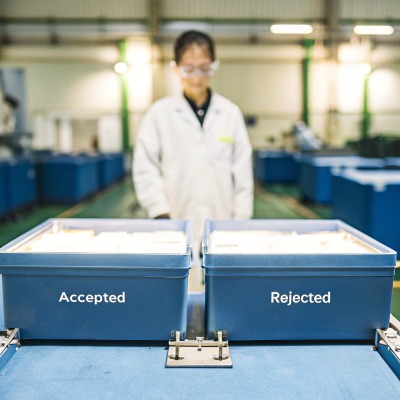
In our Shenzhen facility, we see exactly how many chips get rejected during the sorting process. It is painful to discard functional LEDs just because they miss the strict 95 benchmark, but this selectivity is what drives the cost.
Manufacturers charge a premium because producing CRI 95+ LEDs involves significantly lower yield rates and higher material costs. The heavy phosphor loading needed to fill spectral gaps reduces efficiency, meaning we must use more expensive, higher-bin chips to maintain standard brightness levels.
The Hidden Cost of Phosphors
To understand the price tag, you have to look at what goes inside the LED package. A standard blue LED chip is coated with phosphor to create white light. For CRI 80 or even standard CRI 90, the phosphor recipe is relatively straightforward. However, to push that number to 95 or above, we have to change the chemistry entirely.
We add heavier, more expensive rare-earth phosphors to the mix. rare-earth phosphors 2 These materials are designed to suppress the blue peak and significantly broaden the red spectrum red spectrum 3. This is not just a matter of using "more" material; it is about using "better" and rarer materials. The cost of these advanced phosphor blends can be several times higher than standard commercial blends. When you ask a supplier about the price, you are partly paying for these raw materials.
The Yield Rate Challenge
The biggest factor, however, is the "yield rate" or binning tightness. When we manufacture a batch of LED wafers, we aim for the highest specifications, but the result follows a bell curve.
- The "Perfect" Center: Only a small percentage of the chips from a single wafer will naturally hit the CRI 95+ target with the correct color temperature and voltage.
- The Usable Majority: The bulk of the production might fall into the CRI 90 range.
- The Budget Tier: The edges of the curve might only qualify as CRI 80.
When you order CRI 95+, you are asking us to cherry-pick the very best chips from that wafer. The rejection rate for this specific tier is much higher. We cannot simply throw away the rest of the chips, but the operational complexity of sorting and the lower volume of "perfect" chips means the unit cost for the elite tier skyrockets. If a supplier offers CRI 95+ at the same price as CRI 90, be very skeptical—they are likely relaxing their binning standards or lying about the specs.
Cost Structure Breakdown
Below is a breakdown of where your money goes when you upgrade tiers.
| Cost Driver | CRI 90+ Standard | CRI 95+ Premium | Impact on Price |
|---|---|---|---|
| Phosphor Composition | Standard broad-spectrum mix | High-load rare-earth blend | High (Material cost) |
| Chip Binning (Yield) | High yield (60-70% of wafer) | Low yield (<20% of wafer) | Very High (Scarcity cost) |
| Testing & QC | Batch sampling | Strict spectral analysis | Medium (Labor cost) |
| Base Material | Standard copper/alloy | High-conductivity substrates | Medium (Thermal management) |
Negotiating on Specs, Not Just Price
When you talk to your supplier, do not just ask "Why is it expensive?" Ask specifically: "Is this price increase due to the phosphor cost or the binning yield?" This shows you understand the manufacturing process. manufacturing process 4 A supplier who knows you understand the yield curve is less likely to inflate the price arbitrarily. They might explain that the "yield cost" is high because they are using a 2-step MacAdam MacAdam Ellipse 5 ellipse binning for your order, which guarantees color consistency—a valid reason for a premium price.
Is the visual difference between CRI 90 and CRI 95 worth the extra investment?
During our client visits in Germany, we often do blind tests with designers and contractors. Many cannot tell the difference until we show them a red apple or a skin tone chart under the light.
The investment is worth it primarily for high-end retail, art galleries, and grocery displays where red saturation is critical. While CRI 90 is excellent for residential use, CRI 95 offers a noticeable improvement in R9 values, making skin tones and food look naturally vibrant.

The "Red" Problem (R9)
The standard Color Rendering Index (Ra) is an average of the first 8 pastel colors (R1–R8). Color Rendering Index 6 It does not include saturated red (R9), which is the most difficult color for LEDs to render accurately. This is the secret gap in the data.
- CRI 90: Usually has an R9 value of around 50–60. This is "good" and acceptable for offices or homes.
- CRI 95: Typically guarantees an R9 value of 90+. This is "excellent."
Why does R9 matter? R9 represents deep reds found in:
- Human Skin: Without high R9, skin looks pale, grayish, or sickly.
- Wood Finishes: Mahogany or cherry wood looks flat and desaturated.
- Food: Meats, tomatoes, and bakery items lose their appetizing appeal.
If your project involves a high-end steakhouse, a cosmetic counter, or an art gallery, the difference is absolutely worth the investment. high-end steakhouse 7 For a hallway in an office building or a warehouse, paying for CRI 95 is a waste of budget.
Application Scenarios
We always advise our customers to match the spec to the application. Over-specifying is a common mistake that eats into distributor margins.
Decision Matrix: When to Upgrade
| Application | Recommended CRI | R9 Target | Rationale |
|---|---|---|---|
| Warehousing / Garage | CRI 80 | N/A | Visibility is priority; color is irrelevant. |
| Residential / Office | CRI 90 | > 50 | Balances comfort and cost. Skin looks decent. |
| High-End Retail | CRI 95+ | > 85 | Merchandise must pop. Justifies the premium. |
| Art Gallery / Museum | CRI 97+ | > 95 | Preservation of artist intent is paramount. |
| Hospitality (Dining) | CRI 95+ | > 90 | Food appeal drives revenue. Critical for ambiance. |
Visual Perceptibility vs. Data
In our experience, the jump from CRI 80 to CRI 90 is visible to almost everyone. The jump from CRI 90 to CRI 95 is subtle to the untrained eye unless you are looking at red objects.
If you are a distributor, you can save money by sticking to CRI 90 for general inventory. Only stock CRI 95 for specific "Pro" lines targeting architects and designers. If a client asks if they need CRI 95 for their living room cove light, the honest answer is usually "No." The money is better spent on higher quality dimming drivers or better aluminum channels. However, if they have a collection of oil paintings or expensive hardwood floors, the upgrade pays for itself by revealing the true depth of those materials.
Will upgrading to CRI 95+ negatively impact the lumen efficiency of my strips?
Our R&D team fights for every lumen when designing new strips, and physics often gets in the way. High fidelity comes at a physical cost that usually surprises our buyers who want "high brightness and high CRI" simultaneously.
Yes, upgrading to CRI 95+ will negatively impact efficiency, typically causing a 15% to 20% loss in lumens lumens per watt 8 per watt. The thicker phosphor coating required to filter blue light and enhance red spectrums absorbs more energy, turning it into heat rather than visible light.
The "Lumen Penalty" Explained
There is no free lunch in lighting physics. To get high CRI, we have to cover the blue LED chip with a denser, richer phosphor mix. This mix absorbs a significant amount of the blue light to convert it into other colors (greens, yellows, and especially reds).
The more you try to "correct" the light to match the sun (which is what high CRI is), the more energy is lost in that conversion process. This is what we call the Lumen Penalty.
- Standard Efficiency (CRI 80): Might achieve 150+ lumens per watt (lm/W).
- High Efficiency (CRI 90): Might drop to 120–130 lm/W.
- Ultra-High Color (CRI 95+): Often drops to 90–100 lm/W.
Thermal Management Consequences
This drop in efficiency does not just mean "less light." It means "more heat." If a 10-watt LED strip is producing fewer lumens, the remaining energy is being dissipated as heat.
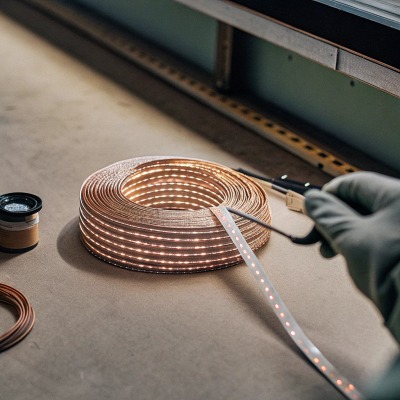
When we design CRI 95+ strips, we often have to use wider PCBs (e.g., 10mm or 12mm instead of 8mm) or thicker copper traces (3oz or 4oz) to handle the thermal load. copper traces 9 If you simply swap a CRI 90 chip for a CRI 95 chip on a cheap, thin PCB, the strip will overheat and fail prematurely.
This is a hidden cost you must ask about. When a supplier quotes you for CRI 95, ask them:
- "What is the lumen maintenance (L70) curve for this version?"
- "Do I need a larger aluminum profile for heat dissipation compared to the CRI 90 version?"
Efficiency Trade-off Table
Here is a realistic look at how the numbers shift for the exact same power consumption (e.g., 14.4 W/m strip).
| Spec Level | Power (W/m) | Lumen Output (lm/m) | Efficacy (lm/W) | Heat Generation |
|---|---|---|---|---|
| CRI 80 | 14.4 W | ~1800 lm | ~125 lm/W | Low |
| CRI 90 | 14.4 W | ~1500 lm | ~104 lm/W | Medium |
| CRI 95 | 14.4 W | ~1200 lm | ~83 lm/W | High |
Compensating for the Loss
If your project requires a specific brightness level (e.g., 1000 lux on a desk), upgrading to CRI 95 means you might need to install more lighting fixtures or increase the wattage of the strips to get the same perceived brightness.
This increases the total project cost—not just the cost of the LED strip, but the cost of the power supplies (larger wattage needed) and the electricity bill over time. When asking suppliers about price differences, remember that the "system cost" of CRI 95 is higher than just the strip price alone. You are paying for efficiency losses across the entire electrical chain.
How can I verify that my supplier is actually delivering true CRI 95+ specifications?
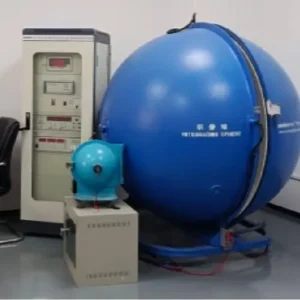
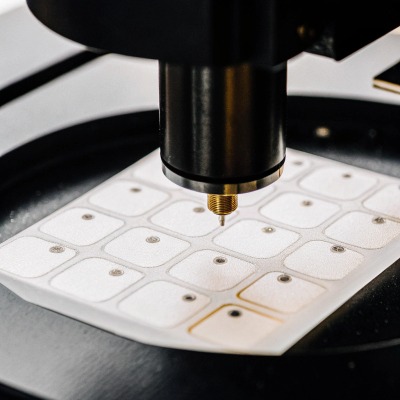
We receive samples from other factories that claim high specs but fail our integrating sphere tests miserably. Trust is good, but in the competitive LED market, data is the only truth.
Verify your supplier’s claims by demanding a comprehensive test report that includes R9 values and a Spectral Power Distribution chart. You should also ask for MacAdam Ellipse step data to ensure color consistency, as true CRI 95+ products maintain tight binning across different batches.
The "Paper Specs" Trap
It is very easy for a factory to print "CRI 95" on a label. It is much harder to produce it. We have seen suppliers take a CRI 90 chip, overdrive it, or simply relabel it to sell at a higher margin. Without proper verification, you are paying a premium for a placebo.
The standard "Ra" value (the general CRI number) can be gamed. A light source can score 95 on Ra but have a terrible R9 (red) score, resulting in light that looks high-quality on paper but makes products look dull in reality.
The Essential Documents to Request
When negotiating the price difference, make your supplier prove the value. Do not just accept a quote; require the following:
- Integrating Sphere Report (IES/LM-79): Look for the date of the test. Is it recent? Does the model number match your quote?
- R9 Value Confirmation: Explicitly ask, "What is the guaranteed minimum R9 value?" If they say "It depends," that is a red flag. True CRI 95 usually guarantees R9 > 90.
- Spectral Power Distribution (SPD) Chart: This graph shows the intensity of light at each wavelength.
- What to look for: A strong, broad "hump" in the red region (600nm–700nm).
- The Cyan Dip: Look at the dip between the blue peak and the green/yellow hump. High CRI LEDs fill this gap better than low CRI ones.
Script for Verification
Use this simple script when communicating with suppliers to test their honesty and technical capability:
"I see the price for CRI 95 is 20% higher. Before we proceed, please send me the SPD chart and the specific R9 values for this batch. Also, can you confirm if this is achieved using a 2-step or 3-step MacAdam ellipse binning?"
Verifying Consistency (SDCM)
High CRI is useless if the color temperature shifts from reel to reel. The price premium for CRI 95+ should also cover tighter binning (SDCM < 3). If you pay extra for CRI 95 but the light looks pinkish on one strip and greenish on the next, the supplier is using "binned-out" leftovers.
| Verification Metric | What to Ask For | acceptable Result for CRI 95+ |
|---|---|---|
| Color Fidelity | "Send the TM-30-15 Report" | Rf > 92, Rg ~ 100 |
| Red Rendering | "What is the R9 value?" | R9 > 85 (Minimum), > 90 (Ideal) |
| Consistency | "What is the SDCM step?" | 3-step or better (2-step is premium) |
| Spectrum | "Show me the SPD graph" | Full spectrum with minimal gaps |
By asking these technical questions, you signal that you are a professional buyer. Suppliers are less likely to overcharge you or send substandard goods when they know you verify the data.
Conclusion
The price difference between CRI 90+ and CRI 95+ is not just a margin markup; it reflects the physical costs of rare phosphors, lower manufacturing yields, and reduced energy efficiency. energy efficiency 10 By focusing your questions on R9 values, lumen efficacy trade-offs, and spectral data, you can determine if the premium delivers real value for your specific project.
Footnotes
- Relates light spectrum exposure to general health and biological information. ↩︎
- Explains the chemical composition of high-CRI LED phosphors. ↩︎
- Describes the electromagnetic radiation detectable by the human eye. ↩︎
- References international standards for manufacturing and quality control. ↩︎
- Explains the industry standard for color consistency. ↩︎
- Defines the industry standard for measuring color accuracy. ↩︎
- Relates lighting quality to food presentation and safety standards. ↩︎
- Defines the standard metric for light source efficiency. ↩︎
- Details the conductive pathways used in electronic circuit boards. ↩︎
- Provides information on energy conservation and efficiency standards. ↩︎