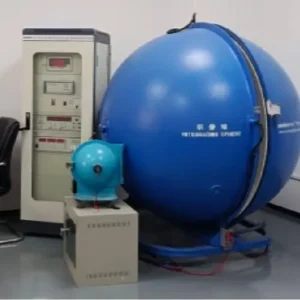
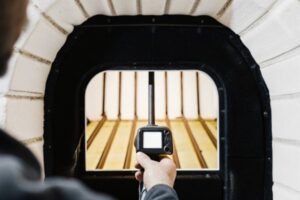
We frequently encounter situations where contractors in Sydney or Melbourne face costly delays because the installed lighting hardware refuses to communicate with the building's control system. This frustration is avoidable if we clarify the technical requirements before our production line even begins manufacturing your order.
To ensure compatibility in Australia, confirm if your COB strip drivers support Trailing Trailing Edge 1 Edge phase dimming for residential use or DALI-2 protocols for commercial automation. You must also verify SAA certification, match the driver load to the dimmer capacity, and check for PWM output to prevent low-level flickering.
Let's examine the specific protocols and certifications you need to check to guarantee a seamless installation.
Is DALI, 0-10V, or Triac the best dimming protocol for my Australian lighting projects?
During our R&D testing for export markets, we noticed that specifying the wrong protocol is the number one cause of flickering and performance issues in Australian homes and offices. We always advise our clients to match the driver technology to the specific environment of the installation.
Trailing Edge (Triac) is best for Australian residential retrofits due to existing wall-plate compatibility, while DALI-2 is superior for new commercial builds requiring individual addressability and energy reporting. 0-10V serves well in large industrial spaces but requires extra control wiring that residential setups often lack.
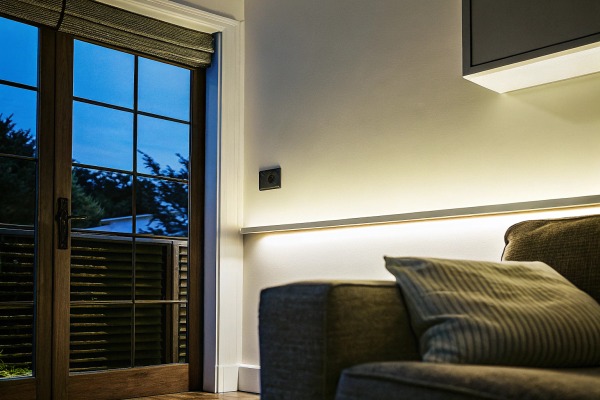
To make the right choice, you must understand the distinct separation between residential and commercial lighting standards in Australia. The "best" protocol depends entirely on the existing wiring infrastructure and the desired level of control.
Residential Standard: Trailing Edge Phase Dimming
In our experience supplying residential projects, the vast majority of Australian homes utilize standard wall-plate dimmers, such as those from Clipsal or HPM. These systems use phase-cut dimming. However, not all phase dimming is created equal.
- Leading Edge: This is older technology designed for incandescent bulbs. It creates a sharp voltage spike that can damage sensitive LED drivers.
- Trailing Edge: This is the modern standard for LEDs. It cuts the waveform at the end of the cycle, resulting in a smoother transition and less stress on the COB driver components.
When we configure drivers for residential clients, we prioritize "Universal" or dedicated Trailing Edge drivers. Using a Leading Edge dimmer with a COB strip often results in audible buzzing and a reduced lifespan for the driver.
Commercial Standard: The Shift to DALI-2
For office fit-outs and commercial buildings, the focus shifts to the Digital Addressable Lighting Interface (DALI). Digital Addressable Lighting Interface (DALI) 3 Digital Addressable Lighting Interface (DALI) 4 Under the National Construction Code (NCC) Section J6, energy efficiency monitoring is crucial. DALI-2 allows for two-way communication. This means the driver can report back to the system if a light has failed or report on energy usage.
- Addressability: Unlike phase dimming, which dims an entire circuit, DALI allows you to control individual COB strips on the same wire run.
- Wiring: It requires a 5-wire setup (Active, Neutral, Earth, plus two DALI control wires). This is standard in new commercial builds but expensive to retrofit in older buildings.
Industrial and Large Scale: 0-10V / 1-10V
This analog protocol is robust and handles long cable runs well, making it suitable for warehouses analog protocol 5 or large retail spaces. However, it is purely analog. It does not offer the feedback loop of DALI, and it cannot typically dim lights to "off" without a separate relay switch. We often recommend this for projects where cost is a major factor and smart reporting is not required.
Comparison of Dimming Protocols
| Feature | Trailing Edge (Phase Cut) | DALI / DALI-2 | 0-10V / 1-10V |
|---|---|---|---|
| Primary Application | Residential / Small Commercial | Large Commercial / Smart Building | Industrial / Warehousing |
| Wiring Requirement | Standard 2-core + Earth | 5-core (Power + 2 Control) | 4-core (Power + 2 Control) |
| Dimming Smoothness | Good (depends on load) | Excellent (Digital precision) | Good (Linear) |
| Cost | Low | High | Medium |
| Feedback/Status | No | Yes (DALI-2) | No |
| Common Issue | Minimum load flicker | Addressing/Programming complexity | Signal voltage drop |
Will these COB strips integrate properly with local automation systems like Clipsal C-Bus?
Our engineering team frequently fields calls from contractors dealing with "ghosting" lights because the strip driver isn't syncing with the C-Bus gateway or similar automation systems. We have found that the issue is rarely the strip itself, but rather the interface between the driver and the control unit.
COB strips integrate with Clipsal C-Bus provided the LED driver is compatible with the C-Bus interface being used, typically via a DALI gateway or a C-Bus-approved phase dimmer. You must verify the driver’s dimming curve Logarithmic Curve 6 aligns with the automation system’s output to ensure linear brightness control.
Integration is a critical concern for high-end Australian homes and commercial spaces. Systems like Clipsal C-Bus Clipsal C-Bus 7, Dynalite, and KNX do not power the lights directly; they send signals to controllers which then regulate the power to your LED strips.
The Driver as the Translator
The COB strip is a passive component. It does not "know" if it is connected to a C-Bus system or a simple switch. The compatibility responsibility lies entirely with the LED driver (power supply). When we collaborate with integrators, we first ask which output module they are using in the switchboard.
Method 1: The DALI Gateway Approach
In modern C-Bus and KNX installations, the most reliable method is using a DALI Gateway.
- The automation system sends a digital command.
- The DALI Gateway translates this into a DALI signal.
- Our DALI-certified LED driver receives the signal and adjusts the COB strip brightness.
This method offers the smoothest dimming (down to 0.1%) and eliminates most flickering issues because the control signal is digital and precise.
Method 2: Phase Dimming Modules
Many older or smaller C-Bus installations use DIN-rail mounted Phase Dimming units. These physically chop the AC mains power before it reaches the driver.
- The Risk: If the C-Bus dimmer has a minimum load requirement (e.g., 20W) and you are only powering a short 2-meter run of COB strip (e.g., 10W), the system will become unstable. The lights may flash or refuse to turn off completely.
- The Solution: You must ensure the driver is a "Phase Dimmable" model and that the total wattage on the circuit exceeds the dimmer's minimum load threshold. We can sometimes provide "load correction devices" to fix this, but it is better to plan the circuit correctly from the start.
Method 3: 0-10V Analog Control
Some automation systems use 0-10V output modules. While effective, this requires ensuring that the driver and the controller share the same "sinking" or "sourcing" current characteristics. A mismatch here leads to a situation where the lights will not dim below 10% or will not reach full brightness.
Automation Compatibility Checklist
| System Component | Required Driver Type | Critical Check |
|---|---|---|
| C-Bus DALI Gateway | DALI / DALI-2 Driver | Ensure unique addressing is set correctly. |
| C-Bus Phase Dimmer (L5504D2U) | Phase-Cut Dimmable Driver | Check Minimum Load vs. Driver Wattage. |
| KNX 1-10V Actuator | 0-10V / 1-10V Driver | Verify current sinking/sourcing match. |
| Relay / Switch Only | Non-Dimmable Driver | Ensure inrush current doesn't trip the relay. |
How do I ensure the LED drivers meet SAA certification requirements for safe installation?
We strictly enforce compliance checks before shipping any power supply units to Brisbane or Perth, as we know that non-compliant drivers can void insurance policies and lead to massive fines for our clients. Safety is not an area where we are willing to compromise or cut corners.
Ensure LED drivers carry the Regulatory Compliance Mark (RCM) and SAA approval numbers, proving compliance with AS/NZS IEC 61347.2.13 safety standards. Equipment lacking these certifications is illegal to install in Australia and poses significant fire and electrical shock risks, potentially voiding building insurance policies.
Navigating the regulatory landscape in Australia is complex but mandatory. Unlike some markets where CE certification is sufficient, Australia requires specific local approvals. Importing or installing non-compliant drivers is a violation of the Electrical Safety Act.
The Regulatory Compliance Mark (RCM)
The RCM (a triangle with a tick inside) is the single mark used to indicate compliance with both electrical safety and electromagnetic compatibility (EMC) regulations.
- Visual Check: When you receive samples from our factory, look for this mark on the driver label.
- Database Check: A legitimate manufacturer will provide an SAA certificate number. You can—and should—verify this number on the EESS (Electrical Equipment Safety System) national National Construction Code (NCC) Section J6 8 database. EESS (Electrical Equipment Safety System) 9 We always provide these certificates with our shipping documentation.
Why "Universal" Certifications Fail
We often see clients tempted by cheaper drivers that claim "Universal CE/RoHS" compliance. In Australia, this is not enough. The local voltage fluctuations and thermal conditions require testing to AS/NZS 61347.2.13 specifically for LED control gear.
- Thermal Safety: Drivers must pass strict thermal endurance tests. Australia’s insulation standards (like covering drivers with thermal insulation in ceilings) are rigorous. A non-compliant driver can overheat and cause a fire.
- EMC (Electromagnetic Compatibility): Drivers switch at high frequencies. If they are not tested to AS/NZS CISPR 15, they can interfere with digital radio (DAB+), Wi-Fi signals, and even emergency service frequencies.
Wiring Rules (AS/NZS 3000)
Your electrician is bound by the "Wiring Rules." They are legally required to refuse installation of equipment that does not have the RCM mark. If you supply uncertified drivers to a project, the electrician will likely reject them on site, causing massive schedule delays while you source compliant replacements.
Essential Certifications for the Australian Market
| Certification / Standard | Purpose | Mandatory? |
|---|---|---|
| SAA (via EESS) | Electrical Safety (Shock & Fire risk) | Yes |
| C-Tick / RCM | Electromagnetic Compatibility (Interference) | Yes |
| AS/NZS 61347.2.13 | Specific safety standard for LED Control Gear | Yes |
| IC-F / IC-4 Rating | Allows driver to be covered by building insulation | Yes (for recessed use) |
| IP Rating (e.g., IP66) | Water/Dust protection for outdoor use | Dependent on location |
What steps can I take to avoid flickering or buzzing when dimming down to low levels?
In our light labs, we simulate low-load conditions to eliminate the audible hum that ruins the ambiance in high-end residential projects. We know that nothing damages a designer's reputation faster than a beautiful lighting cove that strobes like a disco when dimmed.
To prevent flicker and buzzing, select a constant voltage driver with high-frequency PWM output and ensure the total LED load meets the dimmer’s minimum wattage requirement. Buzzing often results from coil vibration in cheap magnetic drivers, so prioritize electronic drivers with digital smoothing algorithms.

Flicker and noise are the enemies of a premium lighting experience. These issues usually occur at the bottom end of the dimming curve (1% to 20% brightness). Solving this requires attention to both the driver technology and the electrical load calculations.
Understanding PWM (Pulse Width Modulation)
High-quality dimming relies on PWM. High-quality dimming relies on PWM 10 Instead of lowering the voltage (which causes color shift), the driver turns the LEDs on and off thousands of times per second.
- Frequency Matters: If the frequency is too low (e.g., under 500Hz), sensitive eyes or phone cameras will detect flickering.
- Our Solution: We utilize drivers with a PWM frequency of over 2000Hz or even 4000Hz. This "Hybrid" dimming ensures the light appears perfectly steady to the human eye and to video cameras, which is crucial for commercial spaces or studios.
The "Minimum Load" Trap
A common pitfall occurs when a powerful dimmer is used for a small strip of light.
- Scenario: A wall dimmer is rated for 400W but has a minimum load of 20W. You install a short 5W accent strip.
- Result: The dimmer cannot maintain the conduction path, causing the light to flash rhythmically (strobing) or not turn on at all.
- Fix: Always check the datasheet for "Minimum Load." If your load is too light, you may need a "load correction capacitor" or a different driver model designed for low-wattage applications.
Eliminating Audible Buzzing
Buzzing comes from physical vibrations inside the driver components—usually the magnetic coils or capacitors expanding and contracting as current flows through them.
- Magnetic vs. Electronic: Old-school magnetic transformers are notorious for humming when dimmed. Modern electronic switching drivers are generally silent.
- Potting: For our premium lines, we use "potted" drivers where the internal components are encased in a silicone resin. This dampens any vibration, making the driver virtually silent even at 1% brightness.
Dimming Curve Compatibility
Finally, ensure the dimming curve matches your switch.
- Linear Curve: 50% on the dimmer slide equals 50% power.
- Logarithmic Curve: 50% on the slide equals roughly 20% power. This matches the human eye's sensitivity, making the dimming feel more natural. Mismatched curves can make the dimming feel "jumpy," where nothing happens for half the slide, and then the light suddenly drops.
Conclusion
Choosing the right protocol prevents costly rework and ensures your project meets Australian standards. Always match your driver to the specific control system—whether it is Trailing Edge for homes or DALI for offices—and rigorously verify SAA certifications. By addressing minimum loads and PWM frequency upfront, you guarantee a safe, flicker-free result that satisfies both inspectors and end-users.
Footnotes
- Lutron is a global leader in lighting control, providing authoritative technical explanations of phase-cut dimming. ↩︎
- Official Australian government database for verifying electrical equipment safety and RCM compliance. ↩︎
- The global industry organization defining DALI and DALI-2 lighting control standards. ↩︎
- Official website of the DALI Alliance, the global industry organization for DALI lighting control standards. ↩︎
- Acuity Brands is a major lighting manufacturer providing clear definitions of 0-10V analog control protocols. ↩︎
- eldoLED is a leading driver manufacturer offering detailed technical resources on dimming curves and perception. ↩︎
- Official product page for the Clipsal C-Bus automation system explicitly mentioned in the article. ↩︎
- Official Australian government website for the National Construction Code containing the referenced energy efficiency standards. ↩︎
- Official Australian database for verifying electrical equipment safety certifications. ↩︎
- General background on the technical principles of PWM in electronics. ↩︎