We often hear this concern from our Australian partners who worry about strict local regulations. It is a smart move to verify a factory's capability before placing a large order.
Requesting references validates adherence to mandatory SAA certification and RCM standards. It confirms the supplier understands local voltage requirements, thermal management for Australian climates, and logistics like GST compliance, ensuring your project avoids costly regulatory failures.
Let's explore why this verification step is crucial for your business success.
How Do Project References Help Me Verify Compliance with Australian Electrical Standards?
Our engineering team spends weeks ensuring our exports meet AS/NZS standards because we know safety is non-negotiable. Compliance is the bedrock of any successful lighting project.
References prove a supplier's familiarity with mandatory SAA approvals and AS/NZS 60598 safety standards. By contacting past clients, you verify that the COB strips passed local inspections, preventing fire hazards and ensuring legal installation in commercial buildings.
The Reality of Regulatory Compliance
When we develop products for the Australian market, we quickly learn that it is one of the most strictly regulated environments in the world. Unlike some markets where a generic CE mark might suffice, Australia requires specific adherence to the Regulatory Compliance Mark (RCM).
If you are a contractor or a wholesaler, you cannot afford to import products that fail a site inspection. When you ask a supplier for references, you are essentially asking for proof that their products have already survived the scrutiny of Australian electrical inspectors.
Key Standards to Verify
A reference from a past project can confirm if the LED strips and drivers met the following critical standards. If a supplier cannot provide a reference who successfully installed their goods in a commercial setting, it is a red flag.
Understanding the RCM Mark
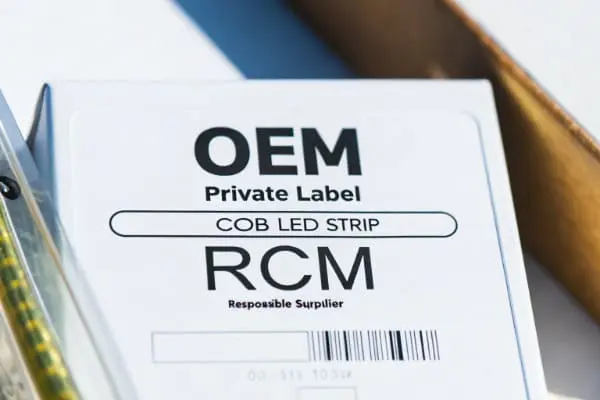
The RCM (Regulatory Compliance Mark) is mandatory for electrical equipment in Australia. It indicates compliance with both electrical safety and electromagnetic compatibility (EMC) standards. Many suppliers in China are unaware of this specific requirement. By speaking to a past client, you can ask: "Did the drivers come with the RCM logo printed on them?" This simple question can save you from having your shipment seized at the border.
Compatibility with Local Dimming Systems
Another aspect of compliance is technical compatibility. Australian commercial projects often use specific dimming protocols like Clipsal C-Bus or Philips Dynalite. These systems are sensitive. A reference can tell you if the supplier's COB strips flickered or dimmed smoothly down to 1%.
Comparison of Standards
To help you understand what to look for, here is a breakdown of the differences between generic international standards and what is actually required in Australia.
| Feature | Generic Standard (Global) | Australian Requirement (AS/NZS) | Why References Matter |
|---|---|---|---|
| Safety Mark | CE / RoHS | RCM (Regulatory Compliance Mark) | Confirms legal sale and installation eligibility. |
| Plug Type | EU / US / UK | AS/NZS 3112 (Type I) | Ensures you don't need illegal adapters. |
| Fire Rating | UL 94 | AS/NZS 60598.1 | Verifies material safety in building interiors. |
| EMC | EN 55015 | AS/NZS CISPR 15 | Prevents interference with radio/comms equipment. |
By digging into these details with a reference, you move beyond the salesperson's promises and get to the technical truth.
What Do Past Australian Case Studies Tell Me About a Supplier's Shipping and Logistics Reliability?
We know that getting goods through Australian Customs requires precise documentation and patience. Delays cost money, and paperwork errors can ruin a project schedule.
Case studies reveal if a supplier handles GST compliance and customs documentation correctly. They demonstrate the manufacturer's ability to navigate Australian logistics channels, ensuring on-time delivery without unexpected duties or border holds that disrupt project timelines.

Navigating the Logistics Maze
Shipping to Sydney or Melbourne is not the same as shipping to New York. The documentation requirements are strict, and the Australian Border Force is vigilant. When we manage logistics for our clients, we have to ensure every commercial invoice is perfectly accurate.
A past case study or reference is your window into a supplier's operational competence. It tells you if they are a "factory that just ships" or a "partner that delivers."
The GST Implication
For low-value imports (under AUD 1,000), the rules are different compared to bulk commercial shipments. A supplier experienced in exporting to Australia will know how to declare values correctly to avoid triggering unnecessary audits or fines regarding the Goods and Services Tax (GST).
When you speak to a reference, ask them about the paperwork. Did the commercial invoice match the packing list? Was the HS Code correct? Incorrect HS Codes are a common cause of delays.
3M adhesive tape 1
Packaging for Long-Haul Transit
Australia is a long way from manufacturing hubs. The journey involves sea freight, rough handling at ports, and potentially hot inland transport. COB LED strips are sensitive electronic components. If they are not packed with sufficient protection, the phosphor coating can be damaged.
Logistics Verification Checklist
Use the following table to guide your conversation with a reference regarding logistics.
| Logistics Aspect | Question to Ask Reference | Desired Outcome |
|---|---|---|
| Documentation | "Did the commercial invoice clearly state the HS Code and origin?" | Fast clearance through Australian Customs. |
| Packaging | "Did the reels arrive with moisture-proof bags and desiccant?" | No moisture damage or oxidation on PCB pads. |
| Lead Time | "Was the actual arrival date close to the estimated delivery date?" | Reliable project scheduling for contractors. |
| GST/Duty | "Did you face any surprise charges due to under-declaration?" | Transparent costs and legal compliance. |
The Cost of Inexperience
We have seen buyers lose weeks because a supplier forgot to include a specific declaration form or used untreated wood pallets that violated Australian biosecurity laws. A supplier with a portfolio of Australian projects has likely already made these mistakes and learned from them, saving you the trouble.
Can Checking References Ensure the COB Strips Meet the Durability Requirements for My Local Projects?
In our lab, we simulate harsh UV and heat conditions because we understand that Australia's climate is uniquely demanding. Standard products often fail under the intense Australian sun.
MacAdam Ellipse 2
References allow you to assess real-world performance against high UV indices and ambient heat. Feedback from locals confirms if the phosphor layer resists cracking and if the thermal management prevents premature lumen depreciation in Australia's unique environmental conditions.
The Challenge of the Australian Climate
Australia presents a unique set of environmental challenges for LED lighting. We are talking about high UV indices that can degrade plastics and resins, and ambient temperatures that can soar in summer.
COB (Chip on Board) technology relies on a continuous phosphor gel layer over the LED chips. If this gel is of low quality, high heat and UV exposure will cause it to yellow or crack. Once the gel cracks, the blue light from the chip leaks through, ruining the color temperature and the "dot-less" effect.
biosecurity laws 4
Thermal Management is Key
Heat is the enemy of LEDs. In many Australian commercial builds, LED strips are installed in ceiling coves or aluminum profiles with limited airflow. If the supplier uses a PCB (Printed Circuit Board) that is too thin (e.g., 2oz copper is standard for high quality, but some use less), the heat cannot dissipate.
By contacting a reference who installed the product 12 or 24 months ago, you can ask the most important question: "Is the light still as bright as day one?"
phosphor coating 5
UV Resistance for Outdoor Applications
Even for indoor applications near windows, UV resistance matters. For outdoor projects, it is critical. Standard silicone can yellow within months under the Australian sun. High-quality suppliers use UV-stabilized materials.
Environmental Stressors vs. COB Performance
The table below illustrates why local feedback is superior to a datasheet when assessing durability.
| Environmental Stressor | Potential Failure Mode | What a Reference Can Verify |
|---|---|---|
| High Ambient Heat (>35°C) | Overheating, reduced lifespan, adhesive failure. | "Did the strips peel off the profile or dim significantly?" |
| High UV Index | Yellowing of the silicone/phosphor gel. | "Has the light color shifted or become warmer/yellower?" |
| Humidity / Salt Air | Corrosion of solder joints and PCB. | "Did you see any rust or failure in coastal installations?" |
| Voltage Fluctuation | Driver failure or flickering. | "Have the drivers survived local grid fluctuations?" |
Real-World Longevity
Datasheets are based on lab conditions. A reference gives you field data. If a project in Queensland or Western Australia has been running for two years without failure, that is the best durability test you can get. It proves the product is robust enough for your specific needs.
What Specific Questions Should I Ask Previous Australian Clients to Validate the Manufacturer's Claims?
When we connect new buyers with our long-term partners, we encourage them to ask tough questions. Transparency builds trust and saves everyone time in the long run.
Goods and Services Tax 6
Ask about color consistency across batches and compatibility with local dimmers like Philips Dynalite. Inquire about the supplier's responsiveness to warranty claims and whether the "dot-less" effect holds up in standard Australian aluminum profiles over time.
digging for the Truth
Getting a name and email address is just the start. To truly validate a manufacturer, you need to ask specific, probing questions. Most people are happy to share their experiences if you are polite and concise.
Your goal is to uncover the "hidden" issues that don't show up in a brochure—things like batch-to-batch consistency and how the company behaves when things go wrong.
Clipsal C-Bus 8
The "Dot-Less" Promise
One of the main selling points of COB strips is the seamless, continuous line of light. However, in shallow Australian aluminum profiles, lower-density COB strips might still show spotting. A past client can tell you exactly which profile depth they used and if the result was truly seamless.
Color Consistency (Binning)
For high-end architectural projects, color consistency is paramount. If you order 500 meters now and another 200 meters in six months, they must match. We call this "MacAdam Ellipse" consistency.
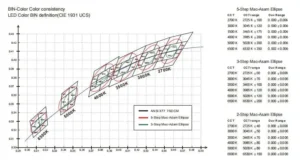
Ask the reference: "Did you ever re-order the same product? Did the color match the previous batch?" If the answer is no, you will face nightmares in renovation or extension projects.
Regulatory Compliance Mark 9
The Interview Guide
Here is a structured approach to questioning a reference to get the most value out of the conversation.
Technical & Installation Questions
- Dimming: "Which dimming system did you use (DALI, 0-10V, Triac)? Did you experience any flicker at low levels?"
- Installation: "Was the 3M adhesive tape on the back strong enough, or did you have to add extra glue?"
- Soldering: "Did the pre-soldered wires hold up, or were the joints weak?"
Service & Support Questions
- Responsiveness: "If you had a technical question, how long did it take them to reply?"
- Warranty: "Have you ever had to claim a warranty? Did they require you to ship the faulty unit back to China, or did they send a replacement based on photos?"
- Honesty: "Did they ever over-promise on delivery dates?"
Why These Questions Matter
Suppliers often claim "24/7 support" and "5-year warranties." But the reality of international trade is that shipping a $10 faulty strip back to China costs $50. A reliable supplier will have a fair policy (e.g., credit on next order or immediate replacement). Only a past client can tell you if the supplier honors these promises or hides behind fine print.
Conclusion
Requesting references is a vital due diligence step that goes beyond simple trust. It verifies regulatory compliance, confirms logistical capability, and proves product durability in Australian conditions. By asking the right questions, you protect your business from risk and ensure a smooth, profitable partnership.
AS/NZS standards 10
Footnotes
- Manufacturer of the specific adhesive tape mentioned. ↩︎
- International authority defining color consistency and MacAdam ellipses. ↩︎
- General overview of Chip on Board LED technology. ↩︎
- Australian government department managing biosecurity and import conditions. ↩︎
- Academic research center providing technical details on LED components. ↩︎
- Official Australian government site regarding GST regulations for imports. ↩︎
- Official site for the Dynalite lighting control system. ↩︎
- Manufacturer site for the C-Bus lighting control system. ↩︎
- Official Australian body managing the Regulatory Compliance Mark system. ↩︎
- The national standards body responsible for AS/NZS electrical standards. ↩︎