
When we finalize a production run of 5,000 meters of COB strips, the excitement of completion often hits a wall: the logistics bill. You need the lights for a project installation next week, but the air freight quote threatens to wipe out your entire profit margin. It is a painful dilemma we help our partners navigate every day. We understand that choosing the right transport mode is not just about moving boxes; it is about protecting your bottom line while keeping your promises to contractors.
choosing the right transport mode 1
For COB LED strip shipments under 100kg or urgent project deadlines, air freight is the optimal choice despite costing 5-10 times more. However, for bulk orders exceeding 200kg where timeline flexibility exists, sea freight is the superior option, reducing shipping costs by up to 80% while requiring 4-6 weeks for delivery.
Let's break down the math, the timelines, and the hidden risks to help you decide exactly when to fly your cargo and when to let it sail.
What Are the Specific Cost Differences Between Air and Sea Freight for a Standard Pallet of LED Strips?
We often see customers shocked when they receive their first "all-in" landed cost calculation for a new project. While our factory price for the LED strips remains stable, the freight component can swing wildly depending on the mode of transport. In our export department, we constantly analyze these quotes to ensure you aren't overpaying for speed you don't actually need.
Air freight typically costs between $5 and $15 per kilogram, making it expensive for heavy pallets. In contrast, sea freight rates drop significantly to $0.50–$2.00 per kilogram. While sea shipping has lower variable costs, fixed port and documentation fees make it uneconomical for small shipments under 0.5 CBM.
Understanding the cost structure is vital because air and sea freight charge for services differently. It is not just a matter of "expensive" versus "cheap"; it is about how the weight and volume of your COB LED strips interact with the pricing models of carriers.
The Structure of Freight Costs
Air freight is generally quoted as an "all-in" rate per kilogram. If you are shipping a standard pallet of COB strips via DHL or FedEx, the price you see is mostly what you pay, covering pickup, transit, and delivery. However, sea freight is far more complex. The low "port-to-port" rate is deceptive. When we arrange a sea shipment, we must factor in:
- Origin Charges: Trucking from our factory to the Shenzhen port, export declarations, and terminal handling charges.
- Ocean Freight: The actual cost to move the container across the water.
- Destination Charges: This is where many importers get blindsided. Fees for unloading, warehousing, and customs clearance at the destination port can sometimes exceed the cost of the ocean freight itself, especially for Less than Container Load (LCL) shipments.
Volumetric Weight vs. Actual Weight
COB LED strips are relatively dense compared to bulky finished fixtures, which is an advantage. However, packaging matters. Air freight carriers use a divisor (typically 5000 or 6000) to calculate volumetric weight. If your strips are packed loosely to prevent damage, you might pay for "air" rather than weight. Sea freight, on the other hand, charges primarily by volume (Cubic Meter or CBM).
Cost Breakdown Example
To give you a clearer picture, here is a comparison based on a hypothetical shipment of 200kg of COB strips (approx. 0.8 CBM) from China to Australia.
| Cost Component | Air Freight (Courier) | Sea Freight (LCL) |
|---|---|---|
| Freight Rate | $8.00 / kg | $80.00 / CBM |
| Base Shipping Cost | $1,600 | $64 (0.8 CBM) |
| Origin Fees | Included | $150 |
| Destination/Port Fees | Included | $450 |
| Customs Brokerage | Included (mostly) | $150 |
| Trucking to Warehouse | Included | $200 |
| Total Estimated Cost | $1,600 | $1,014 |
As you can see, for a 200kg shipment, the gap narrows. If this shipment were only 50kg, the fixed costs of sea freight ($950+) would make it far more expensive than air freight ($400).
How Do Transit Times Differ Between Air Cargo and Sea Shipping to Major Australian Ports?
Time is money, especially when contractors are waiting on site with expensive labor crews. When we coordinate shipments from our warehouse to Sydney or Melbourne, we know that a "30-day" sea estimate can easily turn into 45 days due to unforeseen variables. We have learned to build buffers into these schedules to protect your reputation with your clients.
Air cargo offers rapid transit times of 3 to 7 days from China to Australia, ideal for meeting strict installation deadlines. Sea freight requires 30 to 45 days, subject to port congestion and customs delays. Seasonal peaks like pre-Christmas can further extend sea transit times by 1-2 weeks.

The difference in transit time is not just about the speed of the vehicle; it is about the processing time at every touchpoint in the supply chain.
touchpoint in the supply chain 2
The Reality of "Door-to-Door" Timelines
When we ship via air courier (like DHL or UPS), the package moves through a highly automated network. Customs clearance often happens while the plane is in the air (electronic pre-clearance). This allows goods to arrive at your warehouse in as little as 3 to 5 days.
Sea freight is a slower beast. The vessel might take 12-15 days to sail from Shenzhen to Sydney, but the cargo spends significant time on land.
- Origin Consolidation (3-5 days): Your goods must be delivered to a warehouse, packed into a container with other shipments, and trucked to the port.
- Customs & Loading (2-4 days): The container must clear Chinese customs and be loaded onto the vessel before the cutoff time.
- Destination Processing (5-10 days): Once the ship arrives, the container must be unloaded, moved to a deconsolidation warehouse, unpacked, and cleared by Australian customs before it can be delivered to you.
The Opportunity Cost of Capital
Speed has a financial value beyond just satisfying the customer. We encourage our partners to consider the "Opportunity Cost of Capital." If your cash is tied up in inventory sitting on a boat for 45 days, you cannot use that capital to buy more stock or pay expenses. Air freight, while expensive, allows for faster inventory turnover. You could potentially sell and restock the same product three times in the time it takes for one sea shipment to arrive.
Transit Time Comparison Table
Here is what you can realistically expect for shipments to major Australian hubs.
| Shipping Mode | Port-to-Port Time | Door-to-Door Estimate | Reliability Risk |
|---|---|---|---|
| Air Courier (Express) | N/A | 3 - 5 Days | Low |
| Air Cargo (Commercial) | 1 - 3 Days | 7 - 10 Days | Low-Medium |
| Sea Freight (FCL) | 12 - 18 Days | 25 - 35 Days | Medium |
| Sea Freight (LCL) | 12 - 18 Days | 35 - 50 Days | High (Consolidation delays) |
At What Order Volume Does Sea Freight Become More Economical Than Air Courier Services?
One of the most frequent questions our sales team answers is, "Is this order big enough for a boat?" We analyze thousands of packing lists, and there is a clear tipping point where the hassle of sea freight documentation becomes worth the savings. It is not a guess; it is a calculation based on weight and volume.
packed into a container 3
Sea freight generally becomes more economical than air courier services once a shipment exceeds 150kg to 200kg or 1 CBM in volume. Below this threshold, the fixed destination and handling fees of sea freight often result in a higher total cost per unit than the premium rates of air cargo.
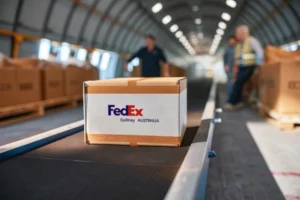
Air Cargo flies on commercial 4
Finding the "break-even point" is crucial for maximizing your profit margins. If you switch to sea freight too early (with too small an order), you might actually pay more than air freight while suffering the long wait times.
Sea freight requires 5
The "Danger Zone": 100kg to 200kg
For orders under 100kg, air freight is almost always the winner. The minimum charges for sea freight documentation, customs entry, and port handling are fixed. Whether you ship 1 box or 10 boxes, the paperwork cost is roughly the same.
- Under 100kg: Stick to Air Courier. It is faster, simpler, and often cheaper.
- 100kg - 200kg: This is the "Danger Zone." Here, the cost of air freight starts to sting, but the fixed costs of sea freight still dilute the savings per unit. In this range, we often recommend Air Cargo (distinct from Air Courier). Air Cargo flies on commercial airlines but requires you to handle customs and trucking at the destination. It is cheaper than DHL/FedEx but faster than sea.
The Volume Factor
COB LED strips are compact, but once you add protective packaging, the volume increases. Sea freight LCL is charged based on the greater of weight (tons) or volume (CBM). Usually, 1 ton = 1 CBM. Since LED strips are light but can be bulky when palletized, you are often paying for volume.
If your order is over 1 CBM (roughly 1 pallet), sea freight becomes the undisputed king of cost efficiency. The savings can be massive—often 70% to 80% cheaper than air.
Decision Matrix for Buyers
Use this simple guide to determine your strategy based on order size.
| Order Weight | Recommended Mode | Why? |
|---|---|---|
| < 100 kg | Air Courier (Express) | Fixed sea fees make ocean shipping too expensive per unit. |
| 100 - 200 kg | Air Cargo / Economy Air | Balances speed and cost; sea freight savings are marginal here. |
| 200 - 500 kg | Sea Freight (LCL) | Significant cost savings; fixed fees are spread over more units. |
| > 500 kg | Sea Freight (LCL or FCL) | Maximum economy. Air freight is cost-prohibitive. |
Can I Combine Air and Sea Shipments to Optimize Delivery for Urgent Project Phases?
In large-scale commercial projects, we rarely see a "one size fits all" solution work perfectly. We frequently advise our partners to split their orders—flying in the initial batch for mock-ups and sailing the rest. This hybrid approach saves the budget without stalling the construction site, ensuring you look like a hero to your client.
calculate volumetric weight 6
Yes, a hybrid strategy is highly effective for optimizing delivery. By air-freighting 10-20% of the order for immediate installation or mock-ups and sending the remaining bulk via sea, you can meet urgent project milestones while maintaining a lower average shipping cost across the total project volume.
This strategy, often called "Air-Sea Split," requires coordination, but it solves the two biggest pain points: the need for immediate product and the need to stay within budget.
customs clearance at the destination 8
Implementing the Hybrid Strategy
Imagine you have a hotel project requiring 2,000 meters of COB strips. The contractor needs to start installing the lobby lights in 10 days, but the guest rooms won't be ready for another month.
- Phase 1 (Air): We ship 300 meters via air. This arrives in 5 days, allowing the contractor to start work and verify the lighting effect on-site.
- Phase 2 (Sea): We ship the remaining 1,700 meters via sea. This arrives in 35 days, just in time for the guest room installation phase.
By doing this, you pay the premium air rate only on the portion that absolutely requires speed. The bulk of the order travels at the low sea rate, keeping your average landed cost low.
shipping a standard pallet 9
Protecting COB Strips in Sea Transit
When splitting shipments, we must pay special attention to packaging for the sea portion. Sea containers are harsh environments.
- Moisture & "Container Rain": Temperature fluctuations can cause condensation inside the container. This moisture is the enemy of the LED phosphor coating and the 3M adhesive backing. For sea shipments, we use industrial-grade vacuum-sealed bags with desiccants (silica gel) to ensure the strips arrive bone-dry.
- Physical Stress: LCL shipments are stacked with other cargo. We reinforce our sea freight pallets with corner guards and shrink wrap to prevent crushing. Air shipments, while handled more gently, still require robust cushioning, but the risk of moisture damage is significantly lower.
Pros and Cons of Hybrid Shipping
| Feature | Benefit | Drawback |
|---|---|---|
| Cost Efficiency | Lowers average cost per meter compared to 100% air. | Slightly higher admin work (two invoices, two trackings). |
| Risk Management | If sea freight is delayed, you still have air stock to work with. | Requires precise project management to time the arrivals. |
| Flexibility | Allows for last-minute design changes on the bulk order based on the air sample. | Color consistency must be managed (ensure same bin/batch for both). |
Conclusion
Choosing between air and sea freight is a strategic balancing act. If your project demands speed or the order is under 100kg, air freight is the necessary investment. For bulk orders over 200kg where margins matter most, sea freight is the clear winner. However, the smartest buyers often use a hybrid approach—flying what is urgent and sailing the rest—to satisfy both the clock and the budget.
fixed port and documentation fees 10
Footnotes
- Government guidance on selecting appropriate freight methods. ↩︎
- Leading academic institution for supply chain research. ↩︎
- ISO standard defining freight container specifications. ↩︎
- Details on commercial air freight service options. ↩︎
- Major shipping line detailing ocean transport timelines. ↩︎
- International standards body for air cargo calculations. ↩︎
- Definition of the specific shipping term used. ↩︎
- Official Australian government guide on import procedures. ↩︎
- Major carrier describing air freight service options. ↩︎
- Industry body explaining cost structures in liner shipping. ↩︎