
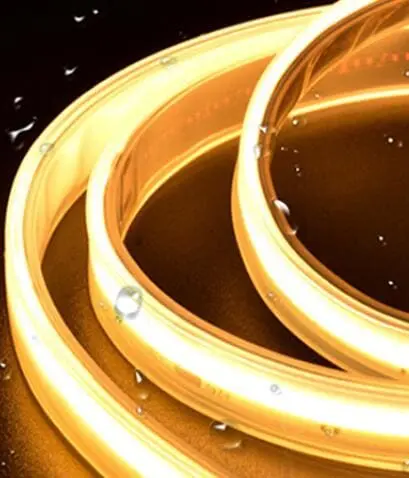
Every year, our production team reviews return data and after-sales tickets from projects across Germany and Australia. One pattern stands out clearly: the cheapest LED strips almost never save money. Contractors buy them to cut budgets, but within 18 months, they are back—replacing failed sections, dealing with color mismatch 1, and paying electricians twice for the same ceiling cove. The real cost of LED strip lighting 2 is not on the invoice. It hides in callbacks, replacement labor, and wasted project hours.
To evaluate maintenance costs for high-density dotless COB LED strips, compare total cost of ownership—not just unit price. Factor in thermal reliability, color consistency across batches, failure rates, driver quality, and ease of section replacement. Strips with superior heat management and pre-tested color binning reduce long-term labor, replacement frequency, and project downtime significantly.
This guide breaks down the four most common maintenance cost traps we see in commercial lighting projects 3. Each section gives you practical benchmarks so you can make smarter purchasing decisions before the first meter is ever installed.
How do I calculate the long-term labor savings from choosing high-density COB strips with better heat dissipation?
Heat is the silent killer of LED installations. When our engineering team runs accelerated aging tests 4 on COB strips, the ones with poor thermal design always fail first—and when they fail in the field, someone has to pay an electrician to fix them.
High-density COB strips with proper heat dissipation through quality substrates and aluminum profiles can last 50,000+ hours, reducing replacement labor by up to 70% over a 10-year period compared to budget strips with inadequate thermal management.
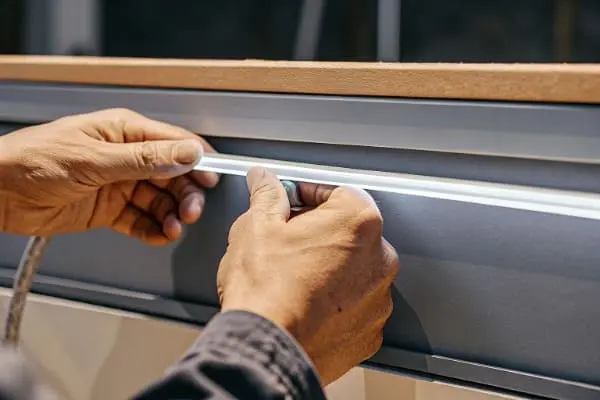
Why Heat Dissipation Matters More Than You Think
Every LED chip generates heat. In a high-density COB strip—where chips sit extremely close together—heat builds up fast. If that heat is not pulled away from the chips quickly, the phosphor layer degrades. Light output drops. Colors shift. Eventually, sections go dark.
We have tested strips from over a dozen factories. The difference is dramatic. A well-designed COB strip on a 2oz copper FPCB with proper thermal paste maintains over 95% of its lumen output 5 after 2,000 hours of continuous operation. A budget strip on thin 1oz copper can drop below 90% in the same period. That 5% gap may sound small, but it triggers earlier replacements and more service calls.
Calculating Your Actual Labor Savings
Here is a simple framework. Assume a commercial project with 500 meters of COB strip installed across multiple zones.
| Cost Factor | Budget COB Strip | Project-Grade COB Strip |
|---|---|---|
| Unit price per meter | $3.50 | $8.00 |
| Initial material cost (500m) | $1,750 | $4,000 |
| Expected lifespan (hours) | 20,000 | 50,000+ |
| Replacements needed in 10 years (12 hrs/day) | 2–3 cycles | 0–1 cycle |
| Electrician call-out per replacement | $350–$500 | $350–$500 |
| Estimated total labor cost over 10 years | $4,000–$7,500 | $0–$1,500 |
| Estimated total cost over 10 years | $8,250–$12,750 | $4,000–$5,500 |
The numbers speak for themselves. The budget option looks cheaper on day one. But after two replacement cycles, you have spent double or triple the total cost.
The Role of Aluminum Profiles
Aluminum extrusion profiles are not just decorative. They act as a heat sink. In our project recommendations, we always advise using profiles for any installation running more than 8 hours per day. The profile pulls heat away from the FPCB and dissipates it into the surrounding air. This alone can extend strip life by 30–50%.
Some buyers skip the profile to save cost. That decision almost always backfires within 2–3 years, especially in enclosed coves or recessed channels where airflow is limited.
Quick Checklist for Thermal Evaluation
- Ask for the FPCB copper weight (2oz minimum for high-density).
- Confirm the strip has been tested at full load for extended periods.
- Request LM-80 or equivalent aging data if available.
- Plan for aluminum profiles in any continuous-run or enclosed installation.
Will batch-to-batch color inconsistency increase my maintenance costs when I need to replace a single section?
This is one of the most frustrating problems we hear about from contractors and distributors. A strip fails in one zone, they order a replacement, and the new section looks visibly different from the rest of the installation. Suddenly, a simple repair turns into a full re-strip of an entire room.
Yes, batch-to-batch color inconsistency significantly increases maintenance costs. When a replacement section does not match the original color temperature and CRI, you face either visible patchwork or a costly full-length replacement. Tight LED binning and consistent phosphor application are essential to minimize this risk.
What Causes Color Inconsistency?
Color inconsistency comes from two main sources: LED chip binning and phosphor coating. LED chips are sorted into bins based on their color temperature, forward voltage, and luminous flux. Reputable chip suppliers offer tight bins—say, a 2-step or 3-step MacAdam ellipse 8. Cheaper suppliers use wider bins to reduce waste, but that means more variation in the final product.
The phosphor layer on COB strips also matters. Because COB strips use a continuous phosphor coating over densely packed chips, even small differences in phosphor thickness or composition create noticeable color shifts. On our production line, we use automated dispensing systems to control phosphor application within tight tolerances. Not every factory does this.
The Real-World Cost of a Color Mismatch
Imagine you installed 200 meters of 3000K COB strip in a high-end hotel corridor. After 14 months, a 5-meter section near the elevator fails. You order replacement strip from the same supplier, same SKU. It arrives at 3150K. That 150K shift is visible to the naked eye, especially in a continuous cove where old and new strips sit side by side.
Now you have two options. Live with the mismatch (unacceptable in a premium hotel). Or rip out and replace the entire corridor run. The second option costs 10–20 times more than the original repair.
How to Protect Yourself
| Protection Strategy | How It Works | Who Should Use It |
|---|---|---|
| Request SDCM ≤ 3 (MacAdam ellipse) | Ensures tight color binning at the chip level | All commercial and hospitality projects |
| Keep spare stock from the same batch | Guarantees identical color for future repairs | Large-scale installations (100m+) |
| Choose suppliers with consistent phosphor processes | Reduces variation between production runs | Any project requiring visual uniformity |
| Ask for spectral test reports per batch | Verifiable proof of color output | Designers and specifiers |
| Establish a long-term supply agreement | Locks in specifications and reserves stock | Distributors and repeat project contractors |
Our Approach to Color Consistency
When we work on project-grade orders, we reserve a percentage of extra stock from each production batch. We label it with the batch number, date, and spectral data. If the client needs replacement strip 12 or 18 months later, we ship from the same batch. This small step eliminates the biggest single cause of expensive re-work in commercial lighting.
We also test every reel with a calibrated spectrophotometer before it leaves the warehouse. The data goes into the shipping documentation. This means our clients—and their electricians—can verify the match before installation, not after.
Connector Compatibility Matters Too
Do not overlook the physical connection. If connector standards change between batches—different pad spacing, different solder points—your electrician cannot splice in a replacement without custom work. We keep our connector layout consistent across product generations specifically because we know our clients need drop-in replacements, not redesigns.
What quality control benchmarks should I look for to avoid the high cost of frequent on-site failures?
On-site failures are the most expensive kind. They cost material, labor, reputation, and project timelines. Our QC team has tracked failure patterns across thousands of reels, and the root causes are almost always the same: solder joint cracks, driver overload, poor waterproof sealing, or substandard resistor components.
To avoid costly on-site failures, look for COB LED strip suppliers who provide IPC-class soldering standards, 100% electrical burn-in testing, batch-level binning reports, IP rating verification through third-party testing, and LM-80 lumen maintenance data. These benchmarks directly predict field reliability.
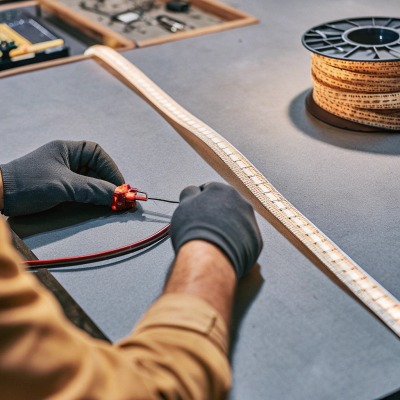
The Five QC Benchmarks That Actually Matter
Not all quality claims are equal. Here are the five checkpoints we recommend to every buyer evaluating a new supplier.
1. Solder Quality and FPCB Integrity
Cold solder joints are the number one cause of dead spots in LED strips. In high-density COB designs, solder joints are tiny and numerous. If the reflow oven profile is not precisely controlled, joints crack under thermal cycling. Ask your supplier whether they follow IPC-A-610 standards 9 for solder inspection. Better yet, ask for close-up photos of solder joints under magnification.
2. Burn-In Testing Before Shipment
Every reel should be powered on at full rated current for a minimum period—typically 8 to 24 hours—before it ships. This catches infant mortality failures: LEDs that were going to die in the first week. On our line, we run a 12-hour burn-in on every project-grade reel. It adds cost and time, but it eliminates almost all early field failures.
3. Driver and Power Supply Matching
A beautiful COB strip means nothing if the driver fails. Underpowered or overpowered drivers cause flickering, overheating, and premature strip death. We supply matched driver recommendations with every order and test compatibility before shipment.
4. IP Rating Verification
If your project involves outdoor or damp environments, do not trust self-declared IP ratings. Ask for third-party test reports from an accredited lab. We have seen strips claiming IP67 that failed a basic splash test. For Australian projects especially, IP65 or higher is often a mandatory spec for exterior coves and facade lighting.
5. Lumen Maintenance Data
LM-80 testing 10 measures how much light output a strip retains over time. It is the closest thing to a durability guarantee. Not every factory invests in this testing because it requires running LEDs for thousands of hours under controlled conditions. If a supplier cannot provide lumen maintenance data, treat that as a red flag.
| QC Benchmark | What to Ask For | Red Flag If Missing |
|---|---|---|
| Solder quality | IPC-A-610 compliance, magnified joint photos | High risk of dead spots and cold joints |
| Burn-in testing | 8–24 hour full-load test per reel | Early field failures likely |
| Driver matching | Tested compatibility documentation | Flickering, overheating, driver failure |
| IP rating | Third-party lab certification | Water ingress and corrosion in damp environments |
| Lumen maintenance | LM-80 or equivalent aging data | Unknown degradation rate, unpredictable lifespan |
Why Cheap Fails Expensive
Budget strips skip most of these steps. They use automated optical inspection only—no burn-in, no aging data, no third-party IP verification. The savings at the factory level are real, maybe $0.50–$1.00 per meter. But when a $3 strip fails in a ceiling cove that costs $400 in labor to access, the math collapses.
We encourage every procurement officer and project estimator to request a factory QC flowchart before placing an order. If the supplier cannot explain their process clearly, or if the process has fewer than five inspection stages, look elsewhere.
Can I reduce my project's total cost of ownership by sourcing pre-tested, project-grade dotless LED solutions?
When our clients in Germany and Australia compare their year-over-year lighting budgets, the ones who switched to project-grade COB solutions almost always report lower total spending—even though they paid more upfront. The difference is not in the LED strip alone. It is in the entire support ecosystem: testing, documentation, spare stock, and technical backup.
Yes, sourcing pre-tested, project-grade dotless COB LED strips reduces total cost of ownership by lowering failure rates, eliminating color mismatch during repairs, simplifying installation with matched accessories, and providing documentation that accelerates project approvals and warranty claims.

What "Project-Grade" Actually Means
The term "project-grade" gets used loosely in the LED industry. For us, it means a product that has been designed, tested, and documented specifically for commercial installations where failure carries real financial and reputational consequences. It is not just about the strip. It is about the complete package.
A project-grade COB strip solution includes:
- Pre-tested reels with individual spectral and electrical data
- Matched drivers with verified compatibility
- Consistent connector standards across production runs
- Reserved spare stock from the same batch
- Full technical documentation for project bids and approvals
The TCO Advantage Over 5 Years
Let us run the numbers on a mid-size commercial fit-out: 300 meters of COB strip across a retail space, operating 14 hours per day.
| Cost Component | Standard Strip | Project-Grade COB Strip |
|---|---|---|
| Material cost (300m) | $1,500 | $3,000 |
| Driver and accessories | $600 | $900 |
| Installation labor | $2,000 | $1,800 (faster with matched parts) |
| Year 1–2 failure repairs | $800 | $0 |
| Year 3–5 replacement sections | $1,200 | $200 |
| Color mismatch re-work | $1,500 | $0 |
| Electrician callbacks | $1,000 | $150 |
| 5-Year Total | $8,600 | $6,050 |
The project-grade solution costs twice as much in material. But it saves nearly $2,500 over five years through fewer failures, no color mismatch incidents, and drastically reduced labor callbacks.
Documentation Saves Time and Money Too
For projects in Australia and Germany, certification and compliance documentation is often required before installation can begin. If your supplier provides test reports, CE or SAA markings, and spectral data with every shipment, your project approval process moves faster. Delays cost money—sometimes more than the product itself.
We include a complete technical dossier with every project order. It contains spectral reports, electrical test data, IP verification certificates, and installation guidelines. Our clients tell us this documentation alone saves them 1–2 weeks on project timelines, which in commercial construction translates to thousands of dollars.
The Spare Parts Strategy
One overlooked element of total cost of ownership is the availability of replacement parts years after initial installation. Budget suppliers change their product lines frequently. The strip you bought 18 months ago may no longer exist. The connector layout may have changed. The color temperature may have shifted.
We maintain product continuity for a minimum of three years on all project-grade SKUs. We also offer batch-reserved spare stock that clients can call up at any time. This means when a section needs replacement in year two or three, the match is guaranteed. No surprises. No re-work.
A Personal Note on Buying Cheap
Buying cheaper strips does not always save money. We have learned this from years of feedback. You have to think about whether replacement stock will still match in two or three years. You need to consider whether the connector will still be compatible. Whether the section can be swapped without tearing out adjacent runs. Maintenance costs often exceed purchase costs, especially on commercial projects. Spending a little more upfront for stable specifications means far less trouble down the road. That is the mindset we believe every buyer should adopt.
Conclusion
Maintenance costs hide in callbacks, mismatched replacements, and failed sections. Evaluate COB LED strips by total cost of ownership—not unit price. Choose stable specifications, demand real QC data, and plan for long-term parts availability.
Footnotes
- Found a comprehensive article explaining LED color differences and how to address them. ↩︎
- Provides a comprehensive overview of LED strip lighting technology and applications. ↩︎
- Provides insights into the commercial lighting industry and its practices. ↩︎
- Replaced with the Wikipedia page on 'Accelerated life testing', which explains the concept generally and authoritatively. ↩︎
- Found the working and authoritative Department of Energy page explaining lumens and lighting. ↩︎
- Replaced with the Wikipedia page on 'Thermal management of high-power LEDs', an authoritative source. ↩︎
- Replaced with the working Wikipedia page for 'Chip on board', which is the underlying technology for COB strips. ↩︎
- Explains the MacAdam ellipse concept for defining color consistency in LEDs. ↩︎
- Replaced with an authoritative ANSI blog post detailing the IPC-A-610 standard. ↩︎
- Found a comprehensive guide from NVC Lighting explaining the LM-80 standard. ↩︎

 English
 Spanish
 German
 Russian
 Arabic
 French
 Portuguese