We often encounter project delays where high-quality lighting designs are rejected simply because the wiring specifications were overlooked during procurement AS/NZS CISPR 15 1. It is incredibly frustrating to have a shipment held at customs or a site inspection fail because the insulation material or conductor type did not meet local safety codes. Through our years of supplying the Australian market, we have learned that strict adherence to standards is the only way to ensure seamless project handovers.
To verify compliance, check for the Regulatory Compliance Mark (RCM) on the driver and ensure the strip wiring utilizes double-insulated cables for mains voltage or correctly rated stranded conductors for low voltage. You must confirm adherence to AS/NZS 3000 wiring rules and obtain ERAC registration evidence from your supplier.
Understanding the specific certification marks and physical wire properties required by Australian law will protect your business from liability and costly rework.
Which specific Australian certification marks should I look for on my COB LED strip wiring?
When we prepare shipments for our partners in Sydney or Melbourne, our quality control team meticulously checks every label, knowing that customs inspectors can be unforgiving with non-compliant markings Certificate of Approval (SAA) 2. Missing a single required logo can cause an entire container to be flagged, leading to expensive storage fees and missed installation deadlines.
The primary mark to look for is the Regulatory Compliance Mark (RCM), which indicates compliance with electrical safety and EMC standards. While the strip itself may not always bear the mark if low voltage, the associated LED driver must display the RCM logo to be legally sold and installed.
Understanding the Regulatory Compliance Mark (RCM)
Navigating the landscape of electrical certifications can be confusing, especially when products are sourced internationally the EESS National Database 3. In Australia and New Zealand, the RCM is the single most important indicator of compliance. the Regulatory Compliance Mark (RCM) 4 It replaced the older C-Tick and A-Tick marks to create a unified system for electrical safety and electromagnetic compatibility (EMC).
For dotless COB LED strips, which typically operate at low voltages (12V or 24V DC), the compliance requirements often focus heavily on the power supply unit (driver) LM-80 and TM-21 Reports 5. The driver is classified as "Prescribed Electrical Equipment" (or Level 3 equipment) under the EESS (Electrical Equipment Safety System) 6. This means it must carry the RCM logo. If you are importing a complete kit that includes a plug-in driver, that driver must be certified.
The Misconception of International Marks
A common issue we see in the supply chain is the reliance on international marks that are not recognized in Australia. While UL (USA) or CE (Europe) indicate safety, they do not legally substitute for the RCM. Australia has unique voltage fluctuations and wiring rules (AS/NZS 3000) 7 that international standards may not fully address. For instance, European standards might allow for certain wire insulation thicknesses that fall below Australian requirements for thermal endurance.
The table below highlights why you cannot rely solely on foreign certifications:
| Certification Mark | Region | Validity in Australia | Notes |
|---|---|---|---|
| RCM | Australia / NZ | Mandatory | Proof of safety and EMC compliance. Required for drivers. |
| CE | Europe | Not Recognized | Self-declaration by manufacturers. Does not prove AS/NZS compliance. |
| UL / ETL | USA | Not Recognized | Good indicator of quality, but legally insufficient for Australian installs. |
| SAA | Australia | Recognized | SAA is a testing body. Their certificate backs the RCM but the product must show the RCM logo. |
Visual Inspection of the Strip
While the low-voltage COB strip itself might not always require a stamped RCM logo directly on the PCB (depending on the specific state regulations regarding "in-scope" equipment), the packaging and technical datasheet should reference compliance with AS/NZS CISPR 15 (for radio interference).
If you are sourcing direct-to-mains (240V) COB strips—which we generally advise against for residential projects due to safety risks—the strip must bear the RCM mark directly. Without it, no licensed electrician will install it, as doing so puts their license at risk. Always verify the RCM validity by asking your supplier for the EESS registration number linked to that specific mark.
How can I confirm the wire gauge and insulation material meet AS/NZS safety standards?
Our engineering team spends weeks testing various PVC compounds because we have seen standard wire insulation turn brittle and crack under the intense Australian UV exposure. It is risky to assume that generic "standard" wiring will survive the heat and environmental stress, potentially leading to short circuits and fire hazards.
Verify that the wire gauge is sufficient for the current load to prevent overheating, typically requiring stranded copper conductors rather than solid cores. Ensure the insulation is V-90 or V-90HT rated for high temperatures and check that cables entering mains enclosures are double-insulated per AS/NZS 3000 requirements.

The Critical Role of Wire Gauge (AWG vs. mm²)
One of the first physical checks you should perform is on the conductor size. In the US, American Wire Gauge (AWG) is standard, but Australia operates strictly on metric measurements (square millimeters, mm²). When importing, a "20 AWG" wire is roughly 0.5mm², but for longer runs of high-density COB strips, this might be insufficient.
COB strips draw significant current because of the high density of chips. If the wire is too thin, you experience voltage drop (dimming at the end of the strip) and, more dangerously, the wire heats up. Under AS/NZS 3000, wiring must be sized to carry the fault current and operating current without exceeding thermal limits.
We recommend the following minimums for connecting tails on COB strips:
| Strip Type | Typical Power | Max Run Length | Recommended Wire Gauge (Min) |
|---|---|---|---|
| 12V COB | 10W/m | 5 meters | 0.75mm² (approx 18 AWG) |
| 24V COB | 14W/m | 10 meters | 0.75mm² (approx 18 AWG) |
| 24V High Power | 20W/m | 5-10 meters | 1.0mm² (approx 17 AWG) |
Insulation Quality and Temperature Ratings
The insulation material is just as critical as the copper inside. Australian standards generally require insulation to be V-75 (75°C) or V-90 (90°C) rated.
- Heat Resistance: COB strips generate heat. If the soldering pad temperature rises to 60°C, and the ambient temperature in a ceiling cavity is 40°C, cheap insulation will degrade. We use V-90HT (High Temperature) PVC to ensure longevity.
- UV Resistance: If the installation is outdoor (even under eaves), the wire insulation must be UV stabilized. Black sheathing usually offers better UV resistance than white, which can yellow and crack.
Stranded vs. Solid Core Conductors
This is a subtle but vital detail in Australian compliance. AS/NZS 3000 and related lighting standards heavily favor or mandate stranded copper wire for luminaires and flexible connections.
- Flexibility: Solid core wire is prone to snapping when bent sharply during installation or due to thermal expansion/contraction of the LED strip.
- Vibration: In commercial settings, slight vibrations can fatigue solid wires.
- Connection Security: Screw terminals in drivers often grip stranded wire (with a ferrule) better than solid wire, which can loosen over time.
Always inspect the cut end of the wire. If it is a single solid piece of copper, it is likely not compliant for use as a flexible lighting tail in Australia. It must be multi-stranded.
What documentation do I need from my manufacturer to prove compliance during a project audit?
We always prepare a comprehensive technical dossier for our commercial partners because we know that site inspectors rarely accept a simple verbal guarantee of safety. Without the correct paperwork readily available, your project handover can be stalled for weeks while you scramble to chase down test reports from overseas.
You need a valid Certificate of Suitability or Approval (SAA) for the driver and an EESS registration number for the responsible supplier. Additionally, request a comprehensive datasheet showing thermal test reports, IP rating certifications, and EMC compliance documents to satisfy AS/NZS 61347 and CISPR 15 standards.
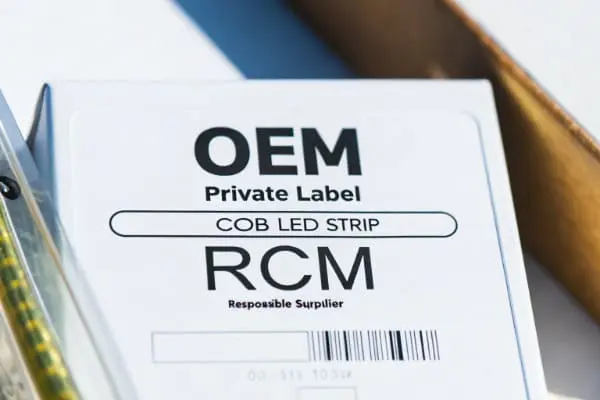
The "Responsible Supplier" Requirement
In the Australian regulatory framework, the burden of proof lies heavily on the "Responsible Supplier." This is typically the Australian importer or manufacturer who is registered on the EESS database. If you are buying directly from overseas for a project, you essentially become the importer.
You must ensure that the equipment is registered. You can verify this by searching the EESS National Database using the model number or the supplier's name. A legitimate factory will provide you with the exact model number that appears on the certificate.
Essential Document Checklist
When an electrical audit occurs, the auditor is looking for a chain of evidence that links the physical product installed to a valid test report. A common failure point is when the datasheet says "Model A" but the certificate says "Model B".
Here is the documentation package you should demand from your manufacturer:
- Certificate of Approval (SAA/Global-Mark): This is for the LED Driver (Power Supply). It must be current (not expired) and clearly list the model number used.
- EMC Test Report (CISPR 15): This proves the LED strip and driver combination does not emit radio frequency interference that disrupts other electronics.
- IP Rating Test Report: If you are using IP65/IP67 strips, a simple "waterproof" sticker isn't enough. You need a lab report confirming it passed the specific water ingress tests (e.g., AS 60529 8).
- LM-80 and TM-21 Reports: While these are performance standards (measuring LED lifespan and lumen depreciation) rather than safety standards, they are often required for commercial project tenders (Green Star or government projects).
Validating the Datasheet
Do not trust a generic datasheet. We have seen suppliers copy-paste datasheets from competitors.
- Check the specs: Does the wattage on the sheet match the label?
- Check the dates: Is the test report less than 5 years old? Standards change (e.g., updates to AS/NZS 61347), and old reports may no longer be valid.
- Check the laboratory: Was the testing done by an accredited laboratory (ILAC/NATA recognized 9)? A self-generated report from the factory's own internal lab carries much less weight and may be rejected by strict auditors.
How do I ensure my dotless COB strips won't fail a site inspection by local electrical contractors?
We have seen contractors refuse to install premium LED strips simply because the connection points looked flimsy or the insulation stripping was messy. It is heartbreaking to see high-quality lighting rejected on-site due to minor installation incompatibilities that signal "risk" to a licensed tradesperson.
Ensure all connections are secure and enclosed in compliant junction boxes to prevent exposed conductors. Verify that the IP rating matches the installation zone requirements and that the polarity is clearly marked to avoid wiring errors that violate AS/NZS 3000 standards.
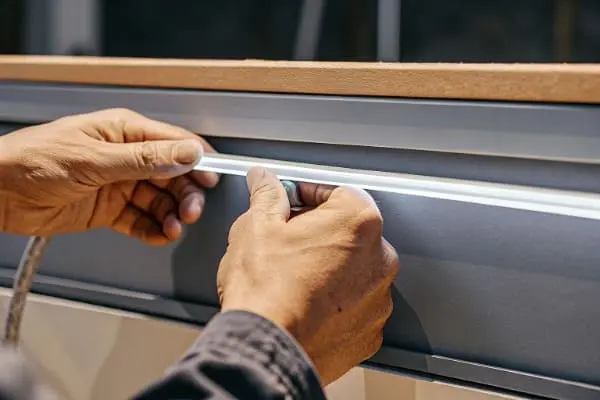
The "Double Insulation" Rule
One of the most common reasons for inspection failure in Australia is the violation of double insulation rules, particularly near the power supply. AS/NZS 3000 (The Wiring Rules) requires that any cable carrying mains voltage (240V) must be double insulated.
However, where low voltage (12V/24V) wires interact with mains wiring (e.g., behind a wall switch or inside a ceiling cavity), segregation is key.
- The Issue: If your COB strip has a single-insulated "figure-8" cable running next to 240V building wire, it may fail.
- The Solution: Use cabling that has an outer sheath (double insulation) even for the low voltage side if it runs through building cavities. Or, ensure a physical barrier separates 240V and 12V/24V wiring.
Secure Connections: Soldering vs. Connectors
Contractors hate unreliable connections because they lead to callbacks.
- Clip Connectors: While convenient, many generic "snap-on" connectors for COB strips are not rated for high current. They can create "hot spots." If you use them, ensure they are rated for the amperage of your strip run.
- Soldering: This is the preferred method for a pass. A soldered joint, covered by heat-shrink tubing with glue lining, provides mechanical strength and moisture protection. Exposed copper at a solder joint is an immediate fail.
IP Zones and Environmental Fit
Inspectors check if the product matches the environment. You cannot install an IP20 (non-waterproof) COB strip in a "wet zone" (like a bathroom niche or outdoor cove).
- Zone 0/1/2: In bathrooms, the distance from water sources dictates the required IP rating (usually IPX4 or IPX5 min).
- Drainage: For outdoor installation in aluminum profiles, inspectors look for drainage. If you seal a strip inside a profile without drainage, condensation builds up and shorts the wire.
- UV Damage: If the wire insulation is cracking from UV exposure, an inspector will flag it as a safety hazard. Ensure outdoor wiring is UV-rated (usually black cable).
Clear Labeling for Contractors
Finally, help the contractor help you. The strip and wires should be clearly labeled:
- Polarity (+/-): COB strips are diode-based. Reversing polarity won't damage them immediately, but it wastes time.
- Voltage: Label the wire ends "24V DC". Plugging a 12V strip into a 24V driver is a fire risk.
- Cut Points: Ensure the cut points on the COB strip are clearly visible so the contractor doesn't cut through a circuit.
Conclusion
Ensuring your dotless COB LED strip wires comply with Australian standards is not just about ticking a box—it is about ensuring the safety and longevity of your project. By verifying the RCM mark on drivers, insisting on stranded copper wiring with proper temperature ratings, and maintaining a strict audit trail of documentation (SAA/EESS), you protect your business from liability. Always work with suppliers who understand the nuances of AS/NZS 3000 to ensure your installations pass inspection the first time, every time.
Footnotes
- Standard for limits and methods of measurement of radio disturbance characteristics for lighting equipment. ↩︎
- SAA Approvals is an accredited body for electrical product certification to Australian/New Zealand standards. ↩︎
- Official public search portal for registered responsible suppliers and equipment certifications in the EESS. ↩︎
- Official information on the RCM mark, its purpose, and compliance in Australia/NZ. ↩︎
- Defines LM-80 for lumen maintenance and TM-21 for lifetime projections of LED light sources. ↩︎
- Official website explaining the Electrical Equipment Safety System (EESS) framework in Australia/NZ. ↩︎
- Overview of AS/NZS 3000, the Australian/New Zealand Wiring Rules, for electrical installations. ↩︎
- Explains AS/NZS 60529, the standard for Ingress Protection (IP) ratings for electrical enclosures. ↩︎
- Official website of NATA, Australia's national accreditation body for testing and inspection services. ↩︎



 English
 Spanish
 German
 Russian
 Arabic
 French
 Portuguese