
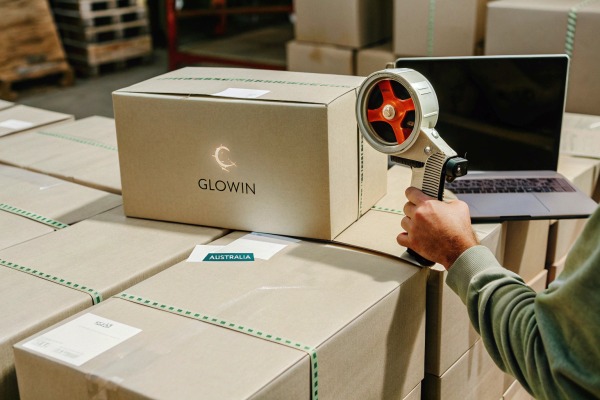
When our team first started shipping LED strips to Australian contractors, we assumed local regulations would be straightforward. We were wrong. The compliance landscape turned out to be far more nuanced than expected, creating confusion that cost us time and nearly cost us key partnerships.
Australia does not have a formal, mandatory RoHS law equivalent to the EU directive. However, Australian businesses increasingly require RoHS compliance due to state-level guidelines, the Industrial Chemicals Environmental Management Standard (IChEMS), global supply chain pressures, and customer expectations for hazardous substance restrictions in electrical products.
This guide breaks down exactly what you need to know about RoHS requirements for the Australian market. We will cover legal obligations, customer expectations, liability protection, and the documentation you should demand from suppliers.
Do I legally need RoHS certification to import LED lighting products into Australia?
Our export team fields this question weekly from new Australian clients. The answer surprises many people because it sits in a gray zone between voluntary and mandatory compliance.
No, Australia does not legally require RoHS certification for importing LED lighting products. However, the Industrial Chemicals Environmental Management Standard (IChEMS) restricts specific hazardous substances like mercury and DBDPE, and state-level guidelines often mirror EU RoHS principles. Practical compliance remains essential for market access.
Understanding Australia's Regulatory Gap
Australia stands apart from the EU, China, and South Korea. specific RoHS laws 1 These regions have enacted specific RoHS laws. Australia has not. This creates what compliance experts call a "regulatory gap."
The absence of a dedicated RoHS law does not mean freedom from chemical restrictions. Australia's primary mechanism for managing industrial chemical risks is IChEMS. state-level guidelines, the Industrial 2 This framework categorizes substances into seven schedules based on environmental concern.
Key IChEMS Restrictions Affecting LED Products
| Substance | Schedule | Effective Date | Threshold |
|---|---|---|---|
| Mercury and mercury compounds | Schedule 6 | July 1, 2026 | 10 mg/kg for substances |
| Decabromodiphenyl ethane (DBDPE) | Schedule 6 | January 1, 2027 | 500 mg/kg for articles |
| 1,2-Dibromoethane | Schedule 5 | January 1, 2026 | Case-by-case |
| 1,2-Dichloroethane | Schedule 4 | January 1, 2026 | Case-by-case |
Mercury restrictions directly impact certain lighting products. LED strips typically avoid mercury, but some specialty lighting applications still use it. The 10 mg/kg threshold for substances is strict.
State-Level Guidelines Create Patchwork Compliance
Several Australian states have adopted guidelines that closely follow EU RoHS principles. These are not binding federal law. But they influence procurement decisions, especially for government projects. government projects 3
When we supply LED strips for commercial projects in Victoria or New South Wales, project managers often reference these state guidelines. They treat RoHS compliance as a baseline expectation, even without federal mandate.
The Practical Reality
Here is what we have learned from years of exporting to Australia: the legal requirement matters less than the practical requirement. Australian contractors and distributors operate in a global market. They source products from multiple countries. They sell to clients who may re-export goods.
This interconnected reality means RoHS compliance becomes a de facto standard. Our Australian partners rarely ask "Is RoHS legally required?" They ask "Can you provide RoHS documentation?"
Why are my Australian clients asking for RoHS compliance if it is not a strict federal mandate?
In our experience working with Australian distributors, the question of "why" reveals deeper market dynamics. Understanding these dynamics helps suppliers prepare better documentation and build stronger partnerships.
Australian clients request RoHS compliance for three main reasons: global supply chain integration requiring consistent standards, customer and end-user expectations driven by environmental awareness, and risk mitigation against future regulatory changes and potential liability claims related to hazardous substances.
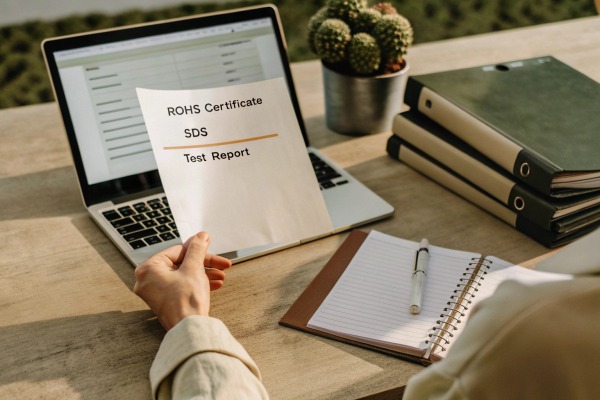
Global Supply Chain Integration
Australian businesses do not operate in isolation. Many of our Australian partners resell products to clients in the EU, Asia, and other regulated markets. A distributor in Sydney might supply LED strips to a hotel chain with properties across Southeast Asia and Europe.
For these businesses, maintaining two separate product lines—one RoHS-compliant and one not—creates unnecessary complexity. It is simpler and more cost-effective to standardize on RoHS-compliant products across all markets.
Customer Expectations and Environmental Awareness
Australian consumers and businesses have grown increasingly environmentally conscious. environmental awareness 4 This awareness extends to B2B relationships. When our team attends trade shows in Melbourne or Brisbane, sustainability questions come up in nearly every conversation.
| Stakeholder | Primary Concern | Documentation Expected |
|---|---|---|
| End consumers | Health and safety | Product labels, certifications |
| Contractors | Project compliance | Test reports, declarations |
| Architects/Designers | Specification matching | Material declarations |
| Government buyers | Policy compliance | Full compliance packages |
Architects and interior designers often specify RoHS-compliant products in their project documentation. This specification flows down to contractors, who then require compliance proof from their suppliers.
Risk Mitigation and Future-Proofing
Smart Australian businesses think ahead. They recognize that regulatory landscapes evolve. The EU started with RoHS 1. Now we have RoHS 3 with expanded substance restrictions. China tightened its standards. South Korea expanded its scope.
Australia's IChEMS framework continues to add new substances to its schedules. The 2025/26 workplan targets BPA, PFAS variants, phthalates, and lead compounds for potential scheduling. Businesses that establish RoHS compliance now avoid scrambling later.
The Trust Factor
Here is something we have observed repeatedly: RoHS compliance signals professionalism. When we proactively provide RoHS documentation to Australian clients, it demonstrates that we understand international standards. It shows we take quality seriously.
This trust factor often matters more than the legal requirement. Australian buyers want suppliers who anticipate their needs. Providing RoHS compliance without being asked builds confidence in the partnership.
Competitive Differentiation
The Australian LED lighting market is competitive. Distributors and contractors have many supplier options. RoHS compliance becomes a differentiator. When two suppliers offer similar products at similar prices, the one with complete compliance documentation wins.
Our sales team has seen deals decided on documentation quality alone. Australian buyers appreciate suppliers who make their jobs easier by providing comprehensive compliance packages upfront.
How does meeting RoHS standards help me minimize liability under Australian consumer safety laws?
When we first expanded into the Australian market, our legal team spent considerable time understanding liability exposure. The connection between RoHS compliance and liability protection is stronger than many suppliers realize.
Meeting RoHS standards minimizes liability under Australian consumer safety laws by demonstrating due diligence in product safety, providing documented evidence of hazardous substance control, supporting defense against negligence claims, and aligning with the Australian Consumer Law's requirement that products be safe and fit for purpose.
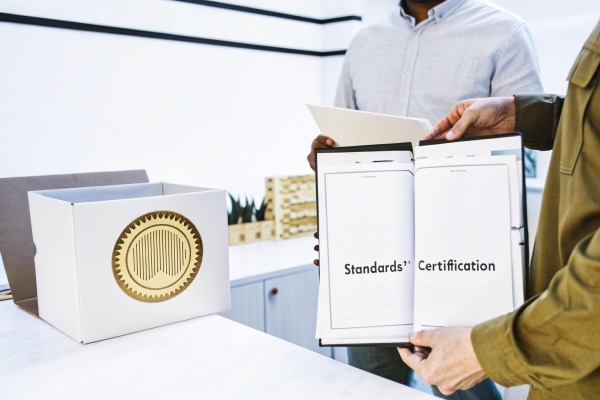
Australian Consumer Law Framework
The Australian Consumer Law (ACL) requires that products sold in Australia be safe and fit for their intended purpose. Australian Consumer Law 5 This applies to all products, including LED lighting. The ACL does not specifically mention RoHS. But it creates broad obligations around product safety.
If a product causes harm due to hazardous substances, the supplier faces potential liability. This liability can include compensation for injuries, property damage, and consequential losses. The financial exposure can be significant.
How RoHS Compliance Supports Legal Defense
| Liability Scenario | Without RoHS Compliance | With RoHS Compliance |
|---|---|---|
| Product recall | Difficult to prove due diligence | Evidence of proactive safety measures |
| Personal injury claim | Vulnerable to negligence allegations | Documented substance control |
| Environmental damage | Limited defense options | Demonstrated environmental responsibility |
| Class action | Higher settlement risk | Stronger negotiating position |
RoHS compliance creates a documented trail of due diligence. If a claim arises, you can demonstrate that you took reasonable steps to ensure product safety. This documentation can be decisive in legal proceedings.
The Footnotes
- Provides background on RoHS laws in other regions, as the article mentions. ↩︎
- IChEMS is Australia's primary mechanism for managing industrial chemical risks, as stated in the article. ↩︎
- Links to a government procurement site, relevant to state guidelines influencing procurement decisions. ↩︎
- Links to the EPA, highlighting the importance of environmental awareness mentioned in the article. ↩︎
- Provides direct access to the Australian Consumer Law, as referenced in the article. ↩︎


 English
 Spanish
 German
 Russian
 Arabic
 French
 Portuguese